


Education Transformation
Blog page Devsh Logo

We Don’t Just Build Schools.
We Build What They Stand For.

Institutional Growth
Driving Excellence in Education

Leadership. Strategy. Transformation.

From academic excellence to institutional growth, we guide schools at every stage. Our expertise as Education Leaders and Institutional Advisors ensures impactful change, better outcomes, and sustainable success in today's evolving education landscape.
Devsh Logo BLOG

Ideas for schools that want to grow well

Practical perspectives on school leadership, curriculum, governance, operations and student growth.

Why More Indian States Are Following NEP's New Age Guidelines  For Class 1 Admissions
Education August 18, 2026

Why More Indian States Are Following NEP's New Age Guidelines For Class 1 Admissions

A quiet but significant shift is underway in Indian classrooms, and it starts before a single lesson is taught. It starts with how old a child is on their very first day of school. Across the country, states are moving to align Class 1 admission with a single, consistent standard: a child must be six years old to begin formal schooling. What used to vary widely from state to state, with some children admitted as young as four and a half, is converging around one number, and one clear reasoning behind it. What NEP 2020 Actually Says The National Education Policy 2020 replaced India's old 10+2 academic structure with a 5+3+3+4 model built around how children actually develop, not around administrative convenience. Foundational Stage (ages 3 to 8): three years of pre school followed by Classes 1 and 2 Preparatory Stage (ages 8 to 11): Classes 3 to 5 Middle Stage (ages 11 to 14): Classes 6 to 8 Secondary Stage (ages 14 to 18): Classes 9 to 12 Under this structure, formal Class 1 instruction is meant to begin only once a child turns six, with the years before spent in structured, play based early learning rather than early academics. Which States Are Making the Shift The Ministry of Education has directed all states and union territories to enforce a six year minimum for Class 1 admission, and several states have moved from guidance to formal policy over the past year. Delhi has notified a uniform six year age rule for Class 1 admission from the 2026 to 27 academic session, applying across government, government aided, and private schools Goa has introduced legislation to raise its Class 1 minimum age from five and a half to six years, amending the state's decades old school education law CBSE affiliated schools nationwide are applying the six year cutoff, generally calculated as of March 31, for the 2026 to 27 session Several other states are in the process of revising their own school education acts to match the national standard Dev'Sh Insight: What makes this shift significant isn't the single year of age. It's the signal it sends, that early childhood is finally being treated as a distinct, protected stage of learning, not just a warm up for Class 1. Why the Age Actually Matters The case for six years is not arbitrary. It reflects a body of developmental research on when most children are cognitively, emotionally, and socially ready for structured, formal instruction.  Earlier academic starts have been linked to more pressure and less resilience in the early school years Play based early learning builds language, motor, and social skills that formal instruction alone does not A consistent national age standard reduces confusion for families who relocate between states It aligns admission policy with the Right to Education Act's own framework for compulsory schooling from age six Rushing a child into formal schooling a year early rarely gives them an advantage. It often just moves the struggle earlier. For Parents: What Actually Changes Families who were planning around an earlier admission age will need to adjust expectations, particularly where informal norms allowed children as young as four and a half into Class 1. Children who don't yet meet the age cutoff can still benefit from a structured pre school or foundational stage programme Cut off dates vary slightly by state and school, so it's worth confirming the exact date locally rather than assuming a national default  A later formal start is not a delay in learning, it's a shift in what kind of learning happens first For Schools: Where the Real Work Begins For school leaders, this shift is not just an admissions policy update. It has real implications for how the foundational stage is staffed, resourced, and taught. Pre primary programmes need genuine play based pedagogy, not a scaled down version of Class 1 Admission and enrolment systems need to be updated well ahead of each academic year, not adjusted after applications open  Parent communication needs to happen early, since this change directly affects family planning and expectations Teacher training for the foundational stage needs to reflect NEP's emphasis on developmentally appropriate learning, not just a lower grade level How Admission Age Used to Vary Across India Before this convergence began, Class 1 admission age was one of the least standardised parts of Indian schooling. A child's starting age could depend almost entirely on which state, board, or even which individual school they applied to. Some states allowed admission as early as four and a half years, others held the line closer to five and a half Private schools in competitive markets often admitted younger to "lock in" enrolment ahead of rivals Government schools tended to follow RTE linked age norms more consistently than private unaided schools Families relocating across states routinely found their child was either a year ahead or a year behind local norms This inconsistency wasn't just an administrative inconvenience. It meant a child's readiness for formal schooling was being decided more by geography and market competition than by developmental science, which is precisely the gap NEP 2020 set out to close.   The Debate: Why Some Schools and Parents Have Pushed Back Not every stakeholder has welcomed the shift without question, and it's worth engaging with the pushback honestly rather than glossing over it. Concerns Raised by Parents Families with children just short of the cut off worry about an extra year of pre school fees and delayed entry into the formal system Some parents feel their child is "ready" earlier than the new cut off allows, based on informal readiness rather than the age norm Confusion during the transition years, when different cohorts are governed by different cut off rules Concerns Raised by Schools Private schools with tight enrolment pipelines worry about a temporary dip in Class 1 intake during the transition year Some schools lack a genuine foundational stage programme and will need to build one quickly rather than gradually Staffing the foundational stage properly requires early years trained teachers, who are in short supply relative to demand These are legitimate operational concerns, and they don't cancel out the developmental rationale behind the policy, they simply mean the transition needs to be managed carefully rather than announced and left for schools to sort out on their own. How the Transition Is Typically Being Managed States implementing the six year rule have generally built in some form of transition relief rather than applying it as an abrupt cut off, precisely because an overnight change would disrupt children already partway through the schooling pipeline. One time age relaxations for children already enrolled or about to enrol under the old norm Phased notice periods, giving schools and parents one to two admission cycles to adjust expectations Public consultation processes before the rule is finalised, allowing schools and parent groups to flag practical concerns Clearer, publicly available cut off dates to reduce the ambiguity that caused confusion under the old system Dev'Sh Insight: The schools that come out of this transition strongest are the ones treating it as a curriculum opportunity, not just a compliance deadline. A genuinely strong foundational stage becomes a real point of differentiation for parents choosing a school. What a Strong Foundational Stage Actually Looks Like With more children now spending an additional year in structured pre primary education before Class 1, the quality of that foundational stage matters more than ever. A weak, worksheet heavy pre primary programme wastes the very time this policy is designed to protect. Play based learning that builds language, number sense, and motor skills without formal testing Low student to teacher ratios appropriate for very young children Teachers specifically trained in early years pedagogy, not repurposed primary teachers Regular, informal communication with parents about developmental milestones rather than marks A physical classroom environment designed for exploration, not rows of desks facing a board The Bigger Picture This shift is easy to read as a small administrative change. It isn't. It reflects a broader rethinking of what early childhood education is for, and it's likely only the beginning of states aligning their school systems more closely with NEP's foundational stage philosophy. At Dev'Sh Group, we help schools navigate exactly these transitions, updating admission policies, redesigning the foundational stage curriculum, and communicating changes clearly to parents. If your school is working through this shift, we're happy to help you get it right. 🌐 www.devshgroup.com πŸ“§ contact@devshgroup.com πŸ“± 8796315550  

Read more
The Biggest Leadership Challenges School Principals Face Today And How to Overcome Them
Education August 14, 2026

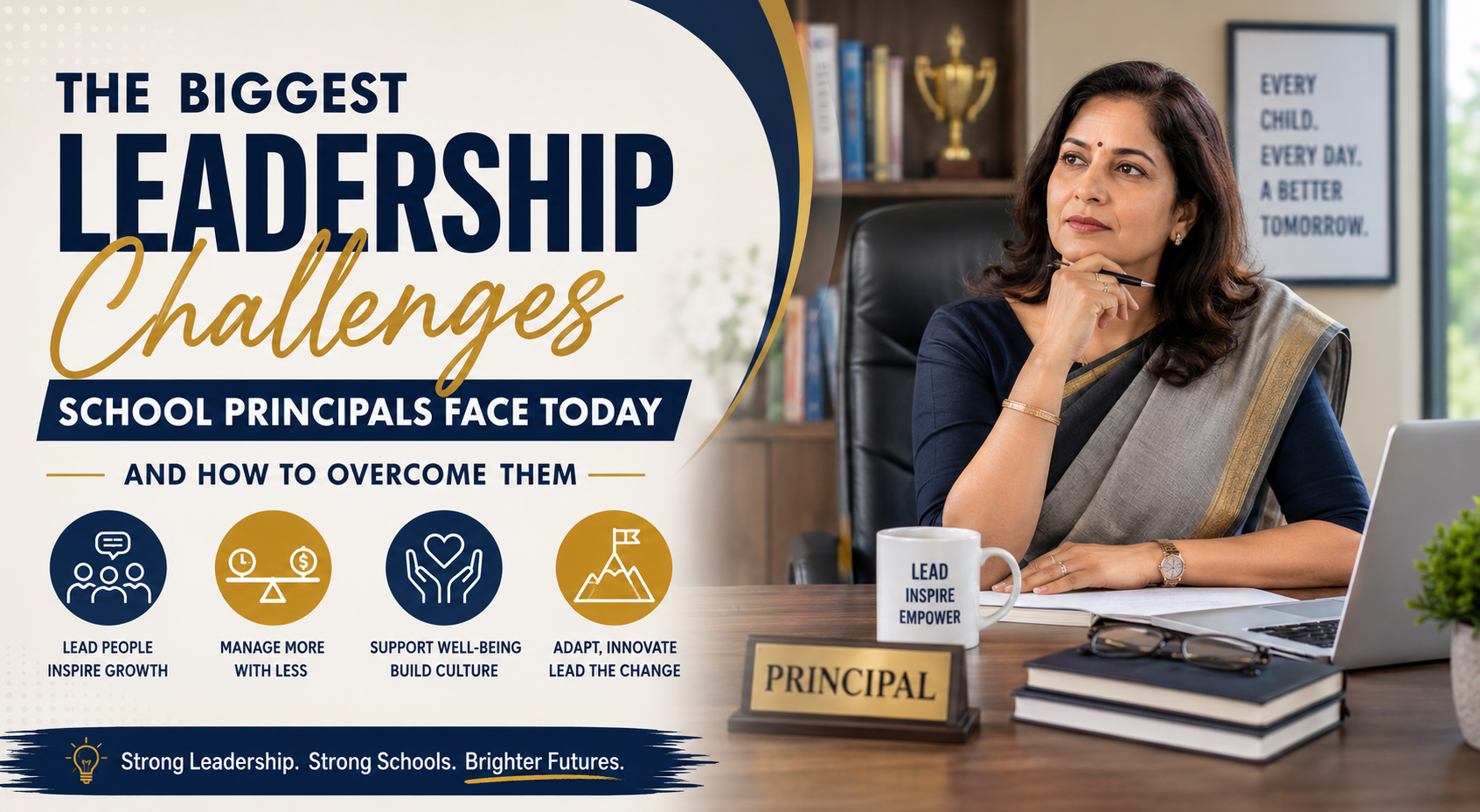
The Biggest Leadership Challenges School Principals Face Today And How to Overcome Them

Ask any principal what their week actually looked like, and "leading the school" is rarely the honest answer. "Surviving the week" usually is. Principalship has quietly become one of the hardest jobs in education. Principals are expected to be instructional leaders, HR managers, crisis handlers, compliance officers, community liaisons, and emotional anchors for staff and students, often with none of the systems or support that would make any one of those roles manageable on its own. Challenge 1: Trapped in Firefighting Mode When systems are unclear, everything becomes urgent. Principals end up spending entire weeks firefighting, a parent complaint here, a staffing gap there, with no time left for the strategic work that would actually prevent those fires. Breaking the Cycle Build clear escalation protocols so not every issue lands directly on the principal's desk Protect a fixed weekly block for strategic planning and treat it as non negotiable Empower middle leaders to own decisions within clear boundaries, rather than escalating everything upward Challenge 2: The Quiet Exodus of Good Teachers Teacher attrition is one of the quiet crises facing Indian schools. Principals often only find out morale has collapsed when a resignation letter arrives, because staff surveys tend to capture politeness, not honesty. Rebuilding Trust Before It Erodes Create confidential, low stakes ways for staff to raise concerns before they escalate Recognise effort visibly and specifically, not only results Address workload honestly rather than assuming commitment should absorb any amount of pressure Dev'Sh Insight: The principals who retain their best teachers are rarely the ones with the biggest budgets. They're the ones whose staff feel genuinely heard between formal reviews, not just during them. Challenge 3: Drowning in Paperwork, Starving for Impact NEP alignment, board requirements, documentation, audits, compliance work has grown heavier even as the expectation to actually improve teaching and learning hasn't gone away. Many principals end up spending more time proving the school is good than actually making it better. Making Compliance Work For You Separate compliance documentation work from instructional leadership time, and staff each deliberately Delegate the paperwork layer to a capable administrator so leadership time protects classroom facing work Use required audits and reviews as genuine diagnostic tools, not just box ticking exercises Challenge 4: Caught Between Parents and Pedagogy Parents today are more informed, more vocal, and often more anxious about outcomes than a generation ago. Principals are frequently caught between what's educationally sound and what a parent group is demanding in the moment. Turning Pressure Into Partnership Communicate proactively about decisions before parents have to ask Build a parent forum with real structure, so concerns surface through a channel rather than through pressure Hold the line on educational judgment while genuinely listening, the two are not in conflict Challenge 5: Change Fatigue Across the Staff Room Whether it's NEP implementation, a curriculum shift, or a new assessment model, principals are constantly asked to lead change while keeping day to day operations running smoothly. Done badly, change initiatives just add to an already full plate and quietly get abandoned. Pacing Change So It Actually Sticks Sequence change rather than launching everything at once Involve teachers early in designing the change, not just implementing it Celebrate small wins along the way instead of waiting for the full rollout to declare success The principals who last in this role aren't the ones who never feel overwhelmed. They're the ones who've built systems that catch problems before those problems reach their desk. Challenge 6: The Never Ending Search for Good Teachers Even well run schools are increasingly struggling to fill specialist teaching posts, particularly in sciences, mathematics, and early years education. Principals are spending more of their own time on recruitment than any job description accounts for, often stepping in personally when a vacancy drags on. Building a Pipeline Instead of a Panic Search Build a standing relationship with two or three teacher training institutes rather than starting the search from scratch each time Maintain a live shortlist of promising candidates year round, not just when a vacancy opens Cross train existing staff in adjacent subjects to create short term coverage flexibility  Involve department heads in recruitment so hiring isn't a bottleneck sitting solely with the principal Challenge 7: Chasing Every New Piece of Edtech From digital attendance systems to AI assisted learning tools, schools are under constant pressure to adopt new technology, often without a clear framework for evaluating whether a given tool actually improves outcomes or just adds complexity. Choosing Tools That Earn Their Place Pilot new technology with a small group of willing teachers before a school wide rollout Set a clear criterion for adoption: does this reduce teacher workload or improve learning, not just "is this what other schools are doing" Budget for training time, not just the tool itself, unused software is a wasted investment Involve teachers in evaluating tools before purchase decisions are finalised Dev'Sh Insight: The principals who navigate technology best aren't the most tech savvy ones. They're the ones who ask "what problem does this actually solve" before every purchase. Challenge 8: One Person Holding Up the Whole School Many schools run on a single point of leadership failure: if the principal is unavailable, decisions stall. Building genuine middle leadership isn't just good practice, it's what makes a principal's own workload sustainable. Multiplying Leadership, Not Hoarding It Identify emerging leaders early and give them real decision making authority, not just extra tasks Create a formal mentoring structure so leadership knowledge isn't locked in one person's head Rotate meaningful responsibilities across department heads so capability is distributed, not concentrated Document key processes so institutional knowledge survives staff transitions The Challenge No One Puts on the Agenda: The Principal's Own Wellbeing Principals are often the last people in a school anyone checks in on. The same emotional toll schools are learning to take seriously for students and teachers applies just as much to the person leading them, and it's rarely acknowledged until it becomes a resignation. Build genuine peer networks with other principals, not just formal cluster meetings Protect personal time as deliberately as any other school priority, an exhausted principal makes worse decisions Seek external mentorship or coaching rather than assuming leadership isolation is simply part of the job A school cannot be more resilient than the person leading it. Protecting the principal's own capacity isn't self indulgence, it's institutional risk management. Sustainable Leadership, Not Superhuman Leadership None of these challenges have a quick fix, and any principal who tells you otherwise is probably early in their tenure. What actually helps is building the systems, delegation, and support structures that make the job sustainable, not just surviving one difficult term at a time. At Dev'Sh Group, we work directly alongside principals to build exactly these systems, drawing on decades inside real schools facing these exact pressures. If leadership at your school feels more reactive than strategic right now, we'd be glad to help you change that. 🌐 www.devshgroup.com πŸ“§ contact@devshgroup.com πŸ“± 8796315550  

Read more
Future Ready Education: What Skills Will Students Need to Succeed Beyond 2030?
Education August 13, 2026

Future Ready Education: What Skills Will Students Need to Succeed Beyond 2030?

The Class 1 student walking into school this year will graduate into a workforce that doesn't fully exist yet. That should change how we think about what we're teaching them today. Every generation of educators believes it is preparing students for an uncertain future. But the pace of change facing today's students, driven by automation, artificial intelligence, and shifting global economies, is different in scale, not just degree. The question schools now have to answer honestly is: are we still preparing students for a world that is already gone? What's Actually Changing Routine cognitive work is increasingly automated, from data entry to basic analysis AI tools are becoming standard in white collar work across nearly every industry Careers are becoming less linear, with multiple pivots across a working life the norm rather than the exception Global, remote, and cross cultural collaboration is now a baseline expectation, not a specialised skill None of this means academic knowledge stops mattering. It means academic knowledge alone is no longer sufficient. The skills layered on top of it are what will determine whether a student thrives or struggles to find their footing. The Skills That Will Actually Matter 1. Critical Thinking Over Memorisation When information is a search query away, the value shifts from recalling facts to evaluating them, telling reliable sources from unreliable ones, and forming independent judgment rather than repeating what was heard first. 2. Adaptability and Learning How to Learn The specific tools students learn in school today will likely be outdated before they enter the workforce. What won't be outdated is the ability to pick up a new tool, system, or skill quickly and without panic. 3. Collaboration Across Difference Future workplaces will be more distributed and more culturally mixed. Students need real practice working with people who think differently, not just sitting near them. 4. Emotional Intelligence As routine tasks get automated, the human skills, empathy, communication, conflict resolution, self awareness, become the ones that are hardest to replace and most valuable to employers. 5. Digital and AI Fluency Not coding for its own sake, but genuine comfort working alongside AI tools: knowing what to ask them, how to verify their output, and where human judgment still has to lead. 6. Financial and Practical Life Literacy Basic financial literacy, decision making under uncertainty, and practical problem solving remain chronically under taught in Indian classrooms relative to how essential they are after graduation. The most future proof skill is not any single skill at all. It is the confidence to keep learning new ones without fear. Rewiring the Classroom for This Shift Move classroom time from pure content delivery to application, discussion, and problem solving Build in genuine project based learning, not projects that are really just longer worksheets Introduce structured collaboration, not just group seating Create space for productive failure, students need to practise recovering from mistakes, not just avoiding them Treat digital literacy as a core skill taught deliberately, not something students are assumed to "pick up" Dev'Sh Insight: NEP 2020's shift toward competency based, skills focused education is not a policy detour, it's a direct response to exactly this shift in what the world will require of today's students. The Cost of Waiting Schools that delay this shift are not standing still, they are falling behind relative to schools that have already started. Students who leave school strong on content but untested on adaptability, collaboration, and critical thinking often struggle in their first real encounter with ambiguity, whether that's a university, an internship, or a job. The Teacher Question Most Reforms Skip Skills based education places new demands on teachers, who are being asked to facilitate thinking rather than simply deliver content, a genuinely different skill from the one most teacher training programmes still emphasise. Teachers need training in facilitating discussion and open ended inquiry, not just lecturing content Assessment design shifts from testing recall to evaluating reasoning, which takes more time to grade and design well  Classroom management changes when students are debating and collaborating rather than sitting silently  Teachers need permission, explicitly from leadership, to let lessons run less predictably than a traditional syllabus allows Dev'Sh Insight: The single biggest bottleneck we see in skills based reform isn't curriculum design. It's giving teachers enough sustained coaching to actually feel confident teaching this way, rather than a one day workshop and a new textbook. Rethinking Assessment for a Skills Based World Traditional exams are good at measuring recall and procedural accuracy. They are far weaker at measuring judgment, collaboration, or the ability to apply knowledge to an unfamiliar problem, exactly the capabilities future ready education is meant to build. Project based assessments that evaluate process and reasoning, not just a final answer Portfolio based evidence of learning collected over a term, not a single high stakes exam Peer and self assessment components that build metacognitive skill alongside subject knowledge Structured oral assessments, which reveal thinking in a way written exams often cannot None of this means abandoning exams altogether, board requirements aren't going anywhere, and academic rigour still matters. It means building genuine skills assessment alongside traditional testing, rather than treating the two as interchangeable. How Indian Schools Compare Globally Education systems in Singapore, Finland, and parts of Australia have spent over a decade shifting toward competency and skills based models, and their experience offers useful lessons rather than a template to copy wholesale. Singapore's emphasis on "Teach Less, Learn More" prioritised depth of understanding over syllabus coverage Finland's project based, low testing model shows strong outcomes with far less standardised assessment pressure Both systems invested heavily in teacher training before curriculum change, not after The common thread across these systems isn't the specific curriculum content, it's that skills based reform succeeded where teacher capability was built first, and struggled wherever it was treated as a paperwork exercise. The Real Advantage No one can predict exactly what the job market will look like in 2035. But the direction of travel is clear enough to act on now: schools that build genuine thinking, adaptability, and human skills alongside strong academics are the ones giving their students the real advantage. At Dev'Sh Group, we help schools redesign curriculum delivery, assessment, and classroom culture to build these skills without abandoning academic rigour. If your school is thinking seriously about what "future ready" actually means in practice, we'd welcome the conversation. 🌐 www.devshgroup.com πŸ“§ contact@devshgroup.com πŸ“± 8796315550  

Read more
Why Children's Emotional Well Being Matters in India And How Schools Can Support It
Education August 7, 2026

Why Children's Emotional Well Being Matters in India And How Schools Can Support It

A child who is anxious, overwhelmed, or emotionally unseen does not learn the same way a secure child does, no matter how good the curriculum is. For years, Indian schools have measured success through marks, ranks, and board results. Emotional well-being was treated as something separate from academics, nice to have, rarely urgent. That assumption is being tested. Rising anxiety among school age children, increasing academic pressure, and a generation growing up more digitally connected but often more isolated have made emotional well-being a classroom issue, not just a home issue. What the Numbers Are Telling Us Mental health researchers and pediatricians across India have flagged a consistent pattern over the last several years: rising rates of anxiety, sleep disruption, and school related stress among children as young as primary school age. Much of it never gets named as a mental health concern. It shows up instead as falling grades, sudden behavioural changes, or a child who simply stops raising their hand. Academic pressure starting earlier, often before Class 5 Social comparison amplified by peer groups and social media Limited unstructured play time compared to previous generations Few safe, consistent adults at school trained to notice early distress A child rarely announces that they are struggling. They show it, through withdrawal, irritability, or silence, long before anyone names it. Why This Is Different in the Indian Context Emotional well being conversations borrowed directly from Western frameworks often miss what actually shapes Indian children's emotional lives: joint family dynamics, competitive academic culture, board exam pressure, and social stigma around anything labelled a "mental health issue." Stigma still discourages many families from naming distress openly, even to themselves Academic competitiveness starts unusually early compared to global peers School counsellors are still rare outside metro private schools Teachers are rarely trained to distinguish a bad week from a genuine warning sign Where Schools Can Actually Make a Difference 1. Build Emotional Check ins Into the Normal School Day Well being support doesn't need a dedicated period to be effective. A five minute morning check in, a simple mood board, or a consistent moment where a teacher asks "how is everyone really doing" builds the habit of noticing early. 2. Train Teachers to Recognise, Not Diagnose Teachers are not therapists, and schools should never ask them to be. What they can be trained to do is notice patterns, a usually talkative child going quiet, a drop in attendance, a change in friendships, and know exactly who to flag it to. 3. Normalise Asking for Help Talk about emotions in assemblies the same way academics are talked about Make the school counsellor visible and familiar, not a room students visit only in crisis Involve parents early, without framing every concern as a diagnosis 4. Protect Unstructured Time Free play, recess, and unscheduled social time are not filler in the timetable. They are where children practise regulating emotions, resolving conflict, and forming the peer relationships that protect them during harder periods. Dev'Sh Insight: Schools that treat well being as a five minute daily habit, not a once a year workshop, see the difference show up in classroom behaviour within a single term. Small Steps That Move the Needle We've worked with schools that assumed they needed a full time psychologist to make progress on well being. In most cases, that's not the first step. The first step is smaller and more achievable: A simple, consistent check in system every homeroom teacher uses A clear, known pathway for any teacher to flag a concern Basic staff training on recognising early signs of distress A culture where struggling is met with support, not judgement What Support Looks Like at Every Age Primary School (Ages 6 to 10) At this stage, emotional support looks like consistency and safety more than conversation. Young children often can't yet name what they're feeling, so schools need to watch behaviour rather than wait for children to articulate distress. Predictable routines that reduce daily anxiety Simple emotional vocabulary built into everyday classroom language Physical comfort and reassurance from a consistent, familiar adult   Middle School (Ages 11 to 14) This is often the hardest stage to support, coinciding with early adolescence, social reshuffling, and the first real experience of academic pressure and peer comparison.  Safe, structured spaces to discuss friendship conflict and social pressure Early, low key conversations about body image and self esteem before they become urgent Teachers trained to distinguish normal adolescent moodiness from a genuine warning sign Secondary School (Ages 15 to 18) Board exam pressure, career anxiety, and the approach of major life decisions converge at exactly the age when many teenagers are least likely to ask an adult for help directly. Confidential, easily accessible counselling that doesn't require a formal referral Open conversations about exam stress that don't minimise it or catastrophise it Career guidance that reduces anxiety about the future rather than adding to it The Role of Parents, and Why Schools Can't Do This Alone A school can build the best well being systems in the country and still see limited impact if home and school are working from different playbooks. Partnership with parents isn't a nice addition to a well being strategy, it's a condition for one actually working. Share what emotional well being support looks like at school so parents can reinforce it, not contradict it, at home Create low pressure ways for parents to raise concerns without feeling like they're escalating a crisis Offer parent workshops on recognising stress at home, framed practically rather than clinically Avoid framing every conversation with parents around problems, normalise well being check ins the same way academic progress updates are normalised Schools that treat parents as partners in well being, not just as an audience for report cards, see support systems that actually hold up outside school hours. The Cost of Getting This Wrong Ignoring emotional well being doesn't keep a school neutral on the issue, it has a cost, even when that cost doesn't show up immediately in enrolment numbers or exam results. Higher teacher burnout from managing unaddressed behavioural issues in the classroom Declining engagement that eventually does show up in academic performance  Erosion of parent trust when concerns are dismissed rather than acknowledged Missed early intervention windows, when small issues are easiest and cheapest to address The Foundation Everything Else Is Built On Emotional well being is not a competing priority to academics. It is the foundation that makes real academic engagement possible. A child who feels safe, seen, and supported is simply better positioned to learn, and that is true in every classroom, at every fee point, in every part of the country. At Dev'Sh Group, we help schools build practical, sustainable well being systems that fit their actual staff and resources, not imported frameworks that look good on paper and disappear by term two. If your school is ready to make this a genuine priority, we'd love to talk. 🌐 www.devshgroup.com πŸ“§ contact@devshgroup.com πŸ“± 8796315550  

Read more
How to Hire Exceptional Teachers and School Leaders for a New School : A Complete Guide for Founders
Education August 6, 2026

How to Hire Exceptional Teachers and School Leaders for a New School : A Complete Guide for Founders

Your building can be finished on time, your labs fully equipped, and your affiliation paperwork in order, and the school can still fail in its first year. The one variable that decides everything else is who stands in front of the classroom and who leads from the principal's office. Every founder we've worked with at Dev'Sh Group asks some version of the same question in month one: "Where do I even find good teachers?" It's the wrong first question. The right first question is: "What am I actually hiring for, and how will I know it when I see it?" Get that clear, and the sourcing problem becomes much easier to solve. Why New Schools Get Hiring Wrong New schools tend to make the same three mistakes, usually because there is no HR history to learn from and every hire feels urgent. Hiring for credentials alone, because a degree and a B.Ed. are easy to verify and classroom presence is not Hiring in a rush to hit the academic year deadline, which means settling for whoever is available rather than who is right Hiring a principal last, when leadership should almost always be one of the first three appointments Dev'Sh Insight: We've seen founders spend six months perfecting the building and six days interviewing the principal who will run it. Flip that ratio and outcomes change dramatically. Start With the Leadership Team, Not the Classroom Staff A new school's first teachers will take their cues from the first principal, whether or not that principal has ever led a school before. This is why we always advise founders to lock in leadership before building out the teaching staff. What to Look for in a Founding Principal A track record of actually improving a school, not just administering one  Comfort with ambiguity, new schools have no systems yet, and the principal will be building most of them The ability to hire well themselves, since they will shape every appointment after theirs Willingness to teach, cover a class, or sit in a parent meeting personally in year one A principal who has never had to run a school with half the systems missing will struggle when yours has none of them yet. Hiring Teachers: Look Past the Resume Subject knowledge is the minimum bar, not the differentiator. Two candidates with identical degrees and identical years of experience can be a completely different bet for a founding staff. What separates them is almost always visible in how they teach a sample lesson, not in how they answer interview questions. A Founder's Hiring Checklist Ask for a 15 minute demo lesson with real students, not a scripted presentation to adults Watch how they handle a question they don't immediately know the answer to Check how they talk about their previous school, with specificity, or only in generalities Call references and ask what the candidate struggled with, not just what they were good at Assess adaptability directly, since new schools change systems constantly in year one Dev'Sh Insight: The strongest founding teachers we've placed were rarely the most polished interviewees. They were the ones who asked the sharpest questions about the school's vision. Building the Culture Before You Have the Numbers With five or ten founding teachers, every single hire disproportionately shapes the culture the fiftieth teacher will inherit two years later. This is the part founders underestimate most. Define your non negotiables in writing before the first interview, not after the first disagreement Involve your founding principal in every teaching hire, even ones you are personally excited about Be honest in interviews about what is still unbuilt, candidates who thrive on structure will opt out, and that's useful information   Where Founders Actually Find Good People Job portals bring volume, not fit, particularly for founding roles. The strongest hires we've helped place came through more deliberate channels. Direct referrals from principals and heads of department at respected schools nearby Teacher training institutes and B.Ed. colleges, approached before placement season gets crowded Alumni networks of the founder's own trust or society, when relevant Education consultants and recruiters who pre screen for classroom performance, not just paperwork   Designing an Interview Process That Actually Predicts Performance Most schools interview the way they were interviewed, which usually means a single conversation heavy on questions and light on evidence. For founding roles, where there is no established team to catch a bad fit, the process itself needs to be more deliberate. A Structure That Works Well for New Schools Round one: a values and mission conversation, checking alignment before assessing skill Round two: a live demo lesson or leadership scenario relevant to the actual role Round three: a conversation with the founding principal or founder directly, focused on how the candidate handles ambiguity Reference checks conducted by phone, not just email, so tone and hesitation are audible Each round should be assessing something different. If every round is really just a variation of "tell me about yourself," the process isn't giving founders new information, it's just repeating the first impression. Compensation and Retention: Getting Founding Staff to Stay Attracting good people to an unproven school is only half the challenge. Founding staff take a real risk joining an institution with no track record, and retaining them through the difficult early years requires more than a competitive salary. Be transparent about compensation benchmarks early, rather than negotiating case by case with no consistent logic Offer genuine growth paths, founding staff who see a future at the school are far less likely to leave once a more established school comes calling Recognise that founding staff are absorbing more ambiguity and unpaid extra effort than staff at an established school, and build that into how they're supported, not just paid Check in explicitly during the first, hardest year, rather than assuming silence means things are fine Dev'Sh Insight: The schools that retain their founding staff past year two are almost always the ones that made those staff feel like co builders of something, not just early employees filling roles. Onboarding: The Step Founders Most Often Skip New schools are often so focused on getting through hiring that onboarding becomes an afterthought, a keys handover and a syllabus, rather than a genuine process of getting a new hire ready to succeed. Give new teachers time with the founding principal before students arrive, not just a staff handbook Pair new hires with a mentor, even in a founding team where everyone is technically new Set clear expectations for the first month specifically, separate from the expectations for a settled year Build in a structured check in at 30, 60, and 90 days rather than assuming problems will surface on their own Red Flags Founders Should Take Seriously Some warning signs are easy to spot on paper. Others only show up in how a candidate talks, and founders under time pressure often talk themselves out of noticing them. A candidate who cannot describe a specific instance of adapting their teaching, only general philosophy  Vague or evasive answers about why they left their last role Discomfort with the idea of being observed teaching, even informally A candidate for a leadership role who has never had to manage an underperforming staff member The Bottom Line for Founders Hiring for a new school is not the same discipline as hiring for an established one. There is no institutional reputation to attract talent, no existing team to absorb a weak hire, and no track record to reassure a nervous candidate. Every single appointment carries more weight than it will two years from now. At Dev'Sh Group, we've supported founders through exactly this process, building leadership shortlists, designing demo lesson assessments, and helping new schools avoid the hiring mistakes that are expensive to undo later. If you are building your founding team and want a second set of experienced eyes on it, we would be glad to help. 🌐 www.devshgroup.com πŸ“§ contact@devshgroup.com πŸ“± 8796315550  

Read more
How to Set Up a CBSE School in Delhi The Complete Step-by-Step Guide
Education July 16, 2026

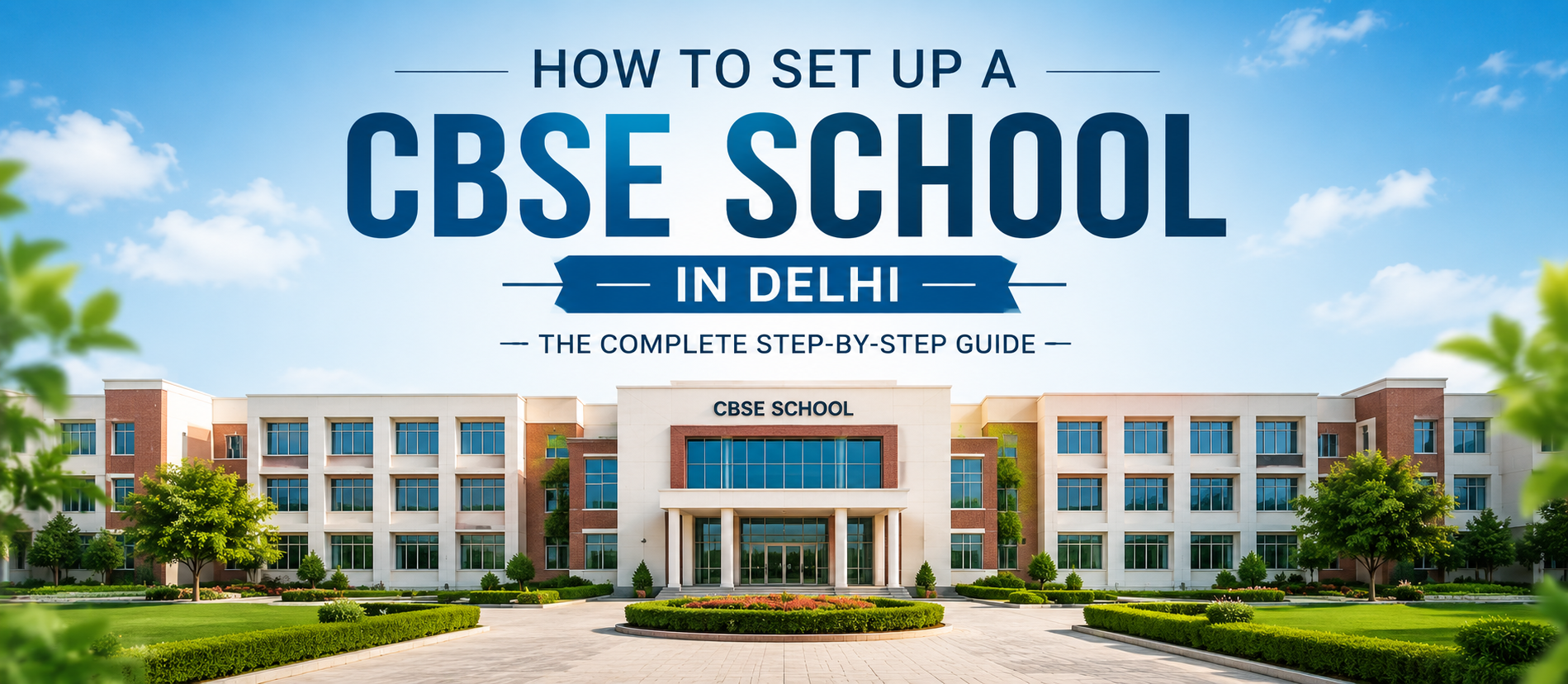
How to Set Up a CBSE School in Delhi The Complete Step-by-Step Guide

One of the most common questions among aspiring educators and school founders is, “We want to start a CBSE school in Delhi - where do we even begin?” Behind this question is often a passionate educator, a determined family, or an educational trust driven by a genuine vision to provide quality education and create a lasting impact. After guiding dozens of school founders through this exact journey from blank land to CBSE affiliation letter, we have mapped out every real step, every hidden delay, and every document that actually matters. This guide is that map. No vague advice. No jargon. Just the process - exactly as it works on the ground in Delhi.   Know What You Are Getting Into The first thing we tell every founder who walks into our office: setting up a CBSE school is not a transaction; it is a multi-year institutional project. The Central Board of Secondary Education (CBSE) governs affiliation through its Affiliation Bye-Laws, and Delhi adds its own regulatory layer through the Directorate of Education (DOE). What our clients are almost always surprised to learn: Provisional affiliation typically takes 12 to 18 months from the date of application Your school must already be operational with students enrolled and classes running before CBSE will consider your application You will be dealing with both the CBSE regional office and the Delhi government simultaneously Infrastructure must be fully ready before the CBSE inspection team visits, no exceptions Dev'Sh Insight: Most delays we see happen because founders underestimate the pre-application preparation time. We recommend starting the documentation and legal setup at least 18 months before you want to open your doors.   Build Your Legal Foundation First Before a single brick is laid or a student is enrolled, you need a legal entity. CBSE will not affiliate a school that is owned by an individual or run as a for-profit business. Education, under Indian law, is a non-profit activity. The three structures we help our clients register: Registered Society: The most common route. Registered under the Societies Registration Act, 1860. Requires a minimum of 7 founding members. Best suited for collaborative and community-driven school projects. Public Charitable Trust: Registered under the Indian Trusts Act. Works well for family-run educational initiatives. Simpler governance but requires careful drafting of the Trust Deed. Section-8 Company: Incorporated under the Companies Act, 2013. More compliance-intensive but offers a strong corporate structure preferred when institutional credibility is a priority. Dev'Sh Insight: We always advise registering the entity in Delhi itself. Out-of-state registrations frequently raise questions during the CBSE and DOE review and can add months to your timeline. Land & Infrastructure — The Non-Negotiables Infrastructure is where most first-time founders either overspend unnecessarily or fall short of CBSE norms. In our experience, a thorough infrastructure audit before construction begins saves lakhs and months. Here is exactly what CBSE requires: Land: Minimum 1.5 acres in metro cities, Delhi qualifies as a metro Owned outright by the trust or society, OR on a long-term lease of at least 30 years in the institution's name Land-use certificate from the Delhi Development Authority (DDA) confirming educational use is permitted Building: Classrooms: minimum 8 sq. metres per student; standard class capacity is 40 students Separate, properly maintained toilets for boys and girls (1 per 40 students minimum) Library with a dedicated reading room Functional science labs: Physics, Chemistry, Biology and a Computer lab Art room, activity room, and a health room with basic first-aid equipment Barrier-free access throughout the campus: ramps, accessible toilets, signage Fire NOC from Delhi Fire Services and a building completion certificate from MCD or NDMC   The Document Stack - Start Collecting Early One of the first things we do when a new client engages dev'Sh Group is run a document audit. In nearly every case, at least 3 to 4 critical documents are either missing, incorrectly named, or obtained from the wrong authority. Here is the complete checklist we use: Trust or Society registration certificate Memorandum of Association (MOA) and Rules & Regulations of the institution Permanent Account Number (PAN) of the institution Land ownership or lease deed with mutation entry in the institution's name Building completion certificate from MCD or NDMC Fire safety NOC from Delhi Fire Services Sanitation certificate confirming safe drinking water and hygiene facilities No Objection Certificate (NOC) from the Delhi Directorate of Education Affidavit by the school manager confirming compliance with CBSE Bye-Laws Staff salary certificates and appointment letters (if school is already functional) Audited financial statements for the last 3 years (where applicable)   Dev'Sh Insight: The Delhi DOE NOC alone can take 3 to 6 months. We recommend initiating this application in parallel with your building construction - not after it.   The CBSE Affiliation Application - Step by Step Once your school is operationally running at minimum Classes I to V - you can apply for Provisional Affiliation through the CBSE OASIS portal (oasis.cbse.gov.in). Our team handles this portal process end-to-end for clients, but here is how it works: Register on OASIS: Create your school profile with exact institutional details. Any mismatch between what you enter and your physical documents is grounds for rejection.   Upload Your Documents: Every file must be in the prescribed PDF format and within size limits. CBSE is strict about document clarity blurry scans cause delays.   Pay the Affiliation Fee: Fees are paid online and vary by school level: Primary, Secondary, or Senior Secondary. Always check the current fee schedule on the CBSE website.   CBSE Inspection: An inspection committee physically visits your school. They verify infrastructure, staff qualifications, and record-keeping. This is the most critical moment in the process.   Receive Provisional Affiliation: If the inspection is cleared and all documents are in order, CBSE issues provisional affiliation and valid for 3 years, after which you apply for regular affiliation.   Staffing: The Compliance Layer Most Founders Miss When we review client applications that were previously rejected or stalled, staff-related non-compliance is one of the top two reasons. CBSE does not just check your building, it checks your people. Here is what must be in place before the inspection: The Principal must hold a postgraduate degree plus B.Ed. with at least 5 years of teaching experience All teachers must have relevant subject degrees and B.Ed. qualifications; designations follow CBSE's TGT and PGT framework Pupil-to-teacher ratio must be maintained at 30:1 and document this clearly All staff must be paid via bank transfer; cash payments are a red flag during inspection PF and ESI contributions must be deducted, deposited, and properly documented Fees, Finances & What Delhi Law Actually Says Running a school in Delhi means operating under the Delhi School Education Act, 1973, a law that many founders are unaware of until it becomes a problem. Here is what we ensure our clients understand from day one: Annual fee increases beyond 10% require prior approval from the Directorate of Education A minimum of 80% of any school surplus must be reinvested into the institution and it cannot be distributed Audited accounts must be submitted annually to both CBSE and the DOE A School Fee Committee with parent representatives is mandatory under Delhi rules   The 5 Mistakes We See Over and Over Again After working with school founders across Delhi and the NCR, these are the five mistakes we see most consistently and the ones that cost the most time and money to fix: Land not in the institution's name: Founders often use family-owned property without transferring it to the trust. CBSE requires the land to be in the trust's name and full stop.   Applying before the school is functional : CBSE does not entertain applications from schools that are not yet running. You need enrolled students and active classes before applying.   Missing the CBSE application window: CBSE opens affiliation applications in specific windows each year. Missing the window means waiting another full year.   Data mismatches on OASIS : A single discrepancy between what is entered on the portal and what appears in your physical documents triggers rejection. We review every field before submission.   Using unapproved learning materials: Using non-CBSE-aligned textbooks before affiliation is confirmed gives the inspection team grounds to flag non-compliance.   Our Final Word Setting up a CBSE school in Delhi is one of the most impactful things you can build. It is also one of the most process-intensive. In our years of consultancy work, the founders who succeed are not necessarily the ones with the largest budgets, they are the ones who plan early, document everything, and work with advisors who have done this before. At dev'Sh Group, we exist precisely for this journey. We have walked this road with founders across Delhi and we know exactly where the potholes are. Whether you are starting from scratch or stuck somewhere in the middle, we are ready to step in. Start Your School Journey with Dev'Sh Group 🌐  www.devshgroup.com πŸ“§  contact@devshgroup.com πŸ“±  879631555

Read more
7 Signs Your School Needs a School 360 Audit (And How to Fix Them)
Education July 13, 2026

7 Signs Your School Needs a School 360 Audit (And How to Fix Them)

Lets be honest for a second. Most school leaders know something isn’t quite right but they can’t put their finger on exactly what. Results are average. Parents are raising questions. Teachers seem exhausted. And yet, on paper, everything looks… fine. That gap between “looks fine” and “actually thriving” is precisely where a School 360 Audit lives. A 360 Audit isn’t about finding fault. It’s about finding the full picture and turning it into a plan. Unlike a government inspection or a teacher appraisal, a School 360 Audit examines your entire school ecosystem leadership, learning, culture, systems, data, and community together, through the same lens. So how do you know if your school needs one? Watch for these 7 signs.   Sign 1. Your Results Are Flat And You Don’t Know Why You’ve tried new programmes. Invested in CPD. Changed the timetable. But the data barely moves. That’s not a performance problem it’s a diagnostic one. You’re applying solutions before identifying the real issue. Watch for: Attainment stagnant for 2+ years despite multiple interventions CPD spend rising, but classroom outcomes aren’t following No one can clearly explain why certain pupil groups are underperforming The Fix:  A 360 Audit maps every factor influencing attainment and pinpoints where the blockage actually is so interventions hit the root cause, not the symptom.   Sign 2. Staff Morale Is Low, But Feedback Is Vague You ask teachers how they’re doing and get polite answers. But retention figures and sickness absence tell a different story. Low morale rarely has one cause it’s usually a quiet accumulation that nobody wants to name directly. Watch for: Staff surveys show satisfaction, yet turnover is above average Teachers declining additional responsibilities without explanation NQTs leaving within their first two years more often than not The Fix:  A 360 Audit creates confidential channels so staff speak honestly turning vague discomfort into clear, solvable patterns.   Sign 3. Parents Are Disengaged Or Engaged For the Wrong Reasons Either parents only appear when there’s a problem, or they’re constantly questioning decisions. Both signal the same thing: communication systems that evolved by accident rather than by design. Watch for: Parents unaware of your school’s educational vision Complaints mostly about communication gaps, not actual decisions Parent Governor role filled by default, not genuine community enthusiasm If parents don’t trust the school, pupils feel it  and that affects everything from behaviour to attainment. The Fix:  A 360 Audit maps your community touchpoints and identifies exactly where trust breaks down so you can rebuild it deliberately, not reactively.   Sign 4. Leaders Are Reacting, Not Leading What did your SLT spend most of last week doing? If the honest answer is “putting out fires” that’s a structural problem, not a personal one. Reactive leadership happens when systems are unclear and data isn’t used proactively. Watch for: SLT meetings dominated by immediate problems, not strategic planning Middle leaders escalating decisions they should own themselves The school improvement plan rarely referenced between formal reviews The Fix:  A 360 Audit stress-tests your leadership structure — revealing where accountability lives and how to shift from firefighting to forward-thinking.   Sign 5. Your Self-Evaluation Is More Ritual Than Reality Many schools have a Self-Evaluation Form. Far fewer have a self-evaluation culture. If your SEF gets updated before Ofsted and then ignored, it’s a document not a tool. Watch for: Judgements consistently rated ‘Good’ regardless of actual evidence The SEF written by one person and rarely discussed as a team Teachers who have never read it and wouldn’t know where to find it Honest self-evaluation isn’t uncomfortable  it’s the most powerful leadership tool in existence. The Fix:  A 360 Audit brings external perspective to your internal story validating what’s genuinely strong and challenging what’s been polished beyond recognition.   Sign 6. Curriculum Is Busy, But Not Coherent Your curriculum looks full. Teachers are delivering. But ask pupils what they’ve learned and why it matters and you get blank looks. Busy and coherent are not the same thing. Watch for: Topics repeated across year groups with no deliberate progression plan Subject leaders designing in isolation with no cross-curricular dialogue Pupils unable to explain the ‘so what’ behind what they’re studying The Fix:  A 360 Audit maps your curriculum against your educational intent not just what’s being taught, but why, to whom, in what sequence, and with what effect.   Sign 7. Something Major Just Happened And You Need to Reset New headteacher. Difficult Ofsted. School merger. Falling roll. Big disruptions good or bad create rare openness to change. The mistake is waiting for things to settle, because that’s when old problems quietly reassemble. This applies if: A new leader wants an honest baseline before making decisions A recent Ofsted felt either unfair or uncomfortably accurate Two school cultures are now colliding after a federation or merger The schools that bounce back fastest treat disruption as an invitation to redesign not just recover. The Fix:  A 360 Audit post-disruption gives you a clean baseline and a structured path forward before old habits take hold again.   What Does a School 360 Audit Actually Look Like? The word ‘audit’ can feel heavy but the process is collaborative, not judgemental. It unfolds in three clear phases: Discovery: Conversations with leaders, teachers, support staff, pupils, and parents. Anonymous surveys. Data and document review. Synthesis: Evidence triangulated across six dimensions: Leadership, Teaching & Learning, Culture & Wellbeing, Curriculum, Systems & Data, and Community. Recommendations: A prioritised action plan. Not a 40-page report nobody reads. A practical roadmap with quick wins, medium-term goals, and long-term strategy. You’re not being graded. You’re gaining clarity.   One Final Thought The best school leaders we’ve worked with share one quality: they’re not afraid of the truth. They’d rather know where things actually stand than operate on assumptions. A School 360 Audit is, at its core, a commitment to honesty honest data, honest conversations, and an honest look at what could be extraordinary. You don’t have to wait for Ofsted to tell you what’s wrong. You can find out yourself — and fix it first. If any of these 7 signs felt familiar, that’s not something to feel bad about. It’s information. And information is where every great school improvement story begins. We’d love to help you write yours. Interested in a School 360 Audit for your school? Book a free 30-minute discovery call with the Dev’Sh Group team, no obligation, no jargon, just an honest conversation about your school. 🌐  www.devshgroup.com πŸ“§  contact@devshgroup.com πŸ“±  8796315550 — The Dev’Sh Group Team    

Read more
NEP 2020 Implementation:  What CBSE Schools in Delhi Must Do Right Now
Education July 9, 2026

NEP 2020 Implementation: What CBSE Schools in Delhi Must Do Right Now

Recently, I sat down with a school principal from a well-performing institution. The school had completed every required process - NEP orientation, development planning, and compliance documentation. But when I asked what had truly changed inside the classrooms, the room fell silent for a moment. "We're working on it," she said. That pause is what this blog is about. NEP 2020 is the biggest shift in Indian education in 34 years. For CBSE schools in Delhi, this isn't a policy to wait out. It's one to lead right now.   What NEP Actually Requires: The Five Shifts That Cannot Be Ignored NEP 2020 is not about adding more to the curriculum. It is about fundamentally rethinking how schools operate. These five areas are non negotiable for CBSE schools in Delhi:   Shift 1   From Rote Learning to Conceptual Understanding This sounds obvious. It is not being done. A school that finishes the NCERT textbook and moves to past papers is still operating in rote mode   regardless of what its mission statement says. Lessons must prioritise application over memorisation Students should be explaining, connecting, and questioning   not copying Teachers need structured time to redesign lesson plans, not just deliver old ones faster   Shift 2   The New 5+3+3+4 Structure The old 10+2 structure is being replaced. Schools need to understand what this means practically: Foundational Stage (Ages 3 to 8): Play based learning. Not worksheets. Preparatory Stage (Ages 8 to 11): Activity based, integrated subjects Middle Stage (Ages 11 to 14): Subject teachers introduce abstract thinking gradually Secondary Stage (Ages 14 to 18): Student chosen electives, critical thinking, real world projects If your school's Class 1 still looks like miniature Class 6  worksheets, uniform seating, silent classrooms you are not NEP aligned, regardless of the age group label.   Shift 3   Holistic Assessment Over Marks CBSE's Competency Based Education (CBE) framework is already in motion. NEP requires schools to assess students on: Skills and competencies, not just content recall Portfolio work, projects, and performance tasks Student self assessment and peer feedback 360 degree progress reports   not just a mark sheet This means your current exam heavy assessment calendar is not just outdated. It is incompatible with where CBSE is heading.   Shift 4   Integration of Vocational Education NEP mandates that vocational exposure begins from Class 6. This does not mean adding a 'life skills' elective once a week. It means structured exposure to areas like: Coding and digital literacy Financial basics and entrepreneurship thinking Local craft, agriculture, or service sector skills depending on context Internship or community engagement opportunities at the secondary level Most Delhi CBSE schools are not doing this. Some have coding clubs. Almost none have a coherent vocational integration plan tied to the curriculum.   Shift 5   Mother Tongue as Medium of Instruction (Primary) This is the most debated shift   and the most misunderstood. NEP recommends home language or regional language as the medium of instruction up to at least Class 5, with a gradual transition to other languages. For Delhi CBSE schools serving mixed language households, this is genuinely complex. But it cannot simply be ignored. Schools must at minimum offer bilingual learning materials in early grades Teachers should be supported to communicate concepts in students' home languages Dismissing this shift because 'parents want English' is not a compliance argument   What Delhi CBSE Schools Must Do Right Now Not next year. Not after the board exams. Right now. Here is a prioritised action list based on where most Delhi CBSE schools currently stand: This Week: Conduct an honest school audit. Identify what's implemented, what's in progress, and what still needs attention. This Term: Redesign assessments with competency-based tasks, portfolios, student reflections, and meaningful parent feedback. This Quarter: Focus on continuous teacher development through coaching, collaboration, and practical classroom application. This Academic Year: Create a vocational learning roadmap for Classes 6 onwards through partnerships and real-world exposure. Before the Next Parent Meeting: Communicate NEP changes clearly and proactively to build trust and understanding. The schools that act today will lead tomorrow.   β—†  Honest Advice What Not To Do Just as important as the action list is what to avoid. These are the most common mistakes Delhi schools are making: Rebranding existing practices with NEP terminology without changing anything Treating NEP as an addition to current workload rather than a redesign of priorities Skipping foundational stages because 'they are not board level' Assuming CBSE compliance means full NEP implementation   they overlap but are not the same Leaving NEP implementation entirely to one coordinator instead of embedding it across leadership NEP 2020 is not a box to check. It is a direction to move in   consistently, structurally, and with honesty about how far you still have to go.   How Dev'Sh Group Helps Schools Get This Right Reading about NEP 2020 is one thing. Implementing it inside a real school with real teachers, real parents, and a real timetable is another. That's exactly where Dev'Sh Group works. Not at the policy level. At the school level. We've worked with CBSE schools across Delhi to close the gap between what NEP 2020 asks for and what's happening in classrooms. Here's how: Curriculum Mapping & Gap Analysis: We sit with your team and map your current setup against the 5+3+3+4 structure. You get a clear, honest picture of what needs to change first. Teacher Training That Sticks: Ongoing, school-embedded training that helps teachers actually shift how they teach not a one-day workshop that everyone forgets by Friday. Assessment Redesign: We help build the 360-degree progress card, introduce student self-reflection tools, and train teachers to give feedback that means something. Vocational Programme Setup: From finding local professional partners to designing the Bagless Days calendar, we handle the groundwork. Parent Communication Strategy: We help schools design transparent communication that brings parents along rather than alarming them.   We don't come in with a template and leave with an invoice. We work alongside your team until the change is real visible in classrooms, felt by students, and trusted by parents. If your school is serious about NEP 2020 not just serious about appearing serious reach out to Dev'Sh Group.  🌐 www.devshgroup.com πŸ“§ contact@devshgroup.com πŸ“± 8796315550   Let's start with a single honest conversation.  

Read more
20 Years Inside Schools: Why Dev'Sh Group Sees What Other Consultants Miss
Education July 3, 2026

20 Years Inside Schools: Why Dev'Sh Group Sees What Other Consultants Miss

Most consultants walk into schools with a clipboard. We walk in with experience, empathy, and a genuine understanding of the education ecosystem That one sentence is not a tagline. It is the entire reason Dev'Sh Group exists, the reason our recommendations actually land, and the reason school leaders tell us we are the first consulting team that has ever made their staff feel understood rather than evaluated. And that distinction matters. Because when people feel understood, they are far more willing to embrace change, engage in the process, and turn recommendations into real outcomes. Yet, despite the importance of this human connection, it is often missing from traditional education consulting. To understand what makes our approach different, it helps to first look at what is broken in the way most education consulting works today and why it continues to fall short for schools that genuinely need support. The Problem With Most Education Consulting Here is a scene that plays out in schools more often than anyone admits: •      A consultant arrives. Two days of observations, a few teacher interviews, some data review. •      Day three: a 60-slide deck. Big words. Bold recommendations. •      The principal nods. Teachers sit politely. •      The consultant leaves. Everyone exhales. Nothing changes. Why does this keep happening? Because the consultant was diagnosing a body they had never lived in. You cannot fully understand a school if you have never experienced the weight of teaching in one, the 7pm parent calls after a full day, the guilt of leaving a struggling child behind, the quiet frustration of a policy that makes no sense on the ground. This is not about bad intentions. It is a structural problem. When your experience lives outside the classroom, there are things you simply cannot see, no matter how sharp your research skills are.  What 20 Years Actually Looks Like Dev'Sh Group was not built in a boardroom. It was built inside schools. Government schools. Private schools. Urban campuses. Low-resource classrooms. High-performing institutions. Schools in crisis and schools quietly doing brilliant work. Over two decades, our team has collectively: •      Taught across primary, middle, and secondary levels •      Served as department heads, curriculum coordinators, and school leaders •      Designed academic programmes from scratch and watched them succeed or fail •      Managed staff through policy changes, school mergers, and post-pandemic chaos •      Sat across from parents who were angry, scared, or completely lost •      Navigated school management committees, education boards, and district politics That experience is not something you learn in a workshop. It is earned through years of showing up, making mistakes, adjusting, and figuring out what actually moves a school forward versus what just looks good on paper. Three Things We See That Others Miss After working with dozens of schools as consultants, we have noticed the same blind spots appear again and again. Here are the three that matter most: 1. The Hidden Teacher Morale Problem Test scores and attendance are the numbers everyone tracks. But none of those numbers tell you: •      That your best teacher is quietly looking for another job •      That half the staff stopped trying new ideas two years ago •      That people smile in meetings but feel invisible to leadership Teacher morale is the engine of a school. When it runs low, everything suffers classroom energy, student relationships, willingness to try anything new. But it rarely shows up in data. So consultants who live by data miss it entirely. We catch it because we know what it feels like from the inside. We know the difference between a team that is tired but still fighting and one that has quietly given up. 2. The Policy-Practice Gap Almost every school has a gap between what its documents say and what actually happens in classrooms. Here is what that looks like in practice: •      Lesson planning policies that three people follow •      Feedback guidelines being implemented by two teachers out of twenty •      Inclusion frameworks that exist on paper but have never been explained to anyone We have walked into schools that looked excellent on paper and found classrooms where students had not received feedback on written work in six weeks. Identifying this gap is not about blame. It is about understanding where the real work is. And it completely changes what the intervention needs to be.  3. The Cultural Current Running Beneath Everything Every school has a culture. But culture is not a motto on the wall. It is the unspoken agreement about how things actually work here: •      Who gets heard and who does not •      What gets rewarded and what gets quietly punished •      What people say in meetings versus what they say in the car park A school can have a culture of fear dressed up as high standards. A culture of burnout dressed up as dedication. A culture of exclusion dressed up as excellence. Identifying the real culture; not the aspirational one and takes years of reading rooms. You develop a feel for it. And once you see it clearly, you stop trying to install solutions on top of it and start working with what is actually there. What Our Work Actually Looks Like We will be honest: we are not the fastest, and we are not the cheapest. If you need a 48-hour audit and a polished PDF, we are not your team. What we do instead: •      Spend real time in classrooms, not just a walkthrough •      Have honest conversations with teachers, not just leadership •      Run listening sessions with students, who always know more than adults think •      Look at what is working, not just what is broken •      Build recommendations around your actual staff and your actual resources •      Stay through implementation and we do not hand over a report and disappear We have worked with schools in crisis. Schools that were already good and wanted to be great. School boards trying to understand why one campus thrives while a sister campus struggles. In every case, the difference was not our methodology. It was our perspective. A Final Word Education consulting has a credibility problem. Too many schools have spent real money on: •      Recommendations that never landed •      Initiatives that collapsed in month two •      Frameworks that sounded brilliant but had no relationship to reality We started Dev'Sh Group because we believed there was a better way. One rooted in genuine classroom experience. In honest relationships with the people inside schools. In the humility to know that every school is different and deserves solutions built for its specific reality not copied from somewhere else. Twenty years inside schools taught us that the answers are almost always already there ; in the people, in the relationships, in the quiet things no one has had the courage to say out loud yet. Our job is to help surface them. If you are a school leader wondering whether your school is reaching its potential; we would love to talk. Not to sell you a programme. Just to listen first. Because that is always where it starts. 🌐 www.devshgroup.com πŸ“§ contact@devshgroup.com πŸ“± 8796315550  

Read more