

Why Children's Emotional Well Being Matters in India And How Schools Can Support It
A child who is anxious, overwhelmed, or emotionally unseen does not learn the same way a secure child does, no matter how good the curriculum is.
For years, Indian schools have measured success through marks, ranks, and board results. Emotional well-being was treated as something separate from academics, nice to have, rarely urgent. That assumption is being tested. Rising anxiety among school age children, increasing academic pressure, and a generation growing up more digitally connected but often more isolated have made emotional well-being a classroom issue, not just a home issue.
What the Numbers Are Telling Us
Mental health researchers and pediatricians across India have flagged a consistent pattern over the last several years: rising rates of anxiety, sleep disruption, and school related stress among children as young as primary school age. Much of it never gets named as a mental health concern. It shows up instead as falling grades, sudden behavioural changes, or a child who simply stops raising their hand.
- Academic pressure starting earlier, often before Class 5
- Social comparison amplified by peer groups and social media
- Limited unstructured play time compared to previous generations
- Few safe, consistent adults at school trained to notice early distress
A child rarely announces that they are struggling. They show it, through withdrawal, irritability, or silence, long before anyone names it.
Why This Is Different in the Indian Context
Emotional well being conversations borrowed directly from Western frameworks often miss what actually shapes Indian children's emotional lives: joint family dynamics, competitive academic culture, board exam pressure, and social stigma around anything labelled a "mental health issue."
- Stigma still discourages many families from naming distress openly, even to themselves
- Academic competitiveness starts unusually early compared to global peers
- School counsellors are still rare outside metro private schools
- Teachers are rarely trained to distinguish a bad week from a genuine warning sign
Where Schools Can Actually Make a Difference
1. Build Emotional Check ins Into the Normal School Day
Well being support doesn't need a dedicated period to be effective. A five minute morning check in, a simple mood board, or a consistent moment where a teacher asks "how is everyone really doing" builds the habit of noticing early.
2. Train Teachers to Recognise, Not Diagnose
Teachers are not therapists, and schools should never ask them to be. What they can be trained to do is notice patterns, a usually talkative child going quiet, a drop in attendance, a change in friendships, and know exactly who to flag it to.
3. Normalise Asking for Help
- Talk about emotions in assemblies the same way academics are talked about
- Make the school counsellor visible and familiar, not a room students visit only in crisis
- Involve parents early, without framing every concern as a diagnosis
4. Protect Unstructured Time
Free play, recess, and unscheduled social time are not filler in the timetable. They are where children practise regulating emotions, resolving conflict, and forming the peer relationships that protect them during harder periods.
Dev'Sh Insight: Schools that treat well being as a five minute daily habit, not a once a year workshop, see the difference show up in classroom behaviour within a single term.
Small Steps That Move the Needle
We've worked with schools that assumed they needed a full time psychologist to make progress on well being. In most cases, that's not the first step. The first step is smaller and more achievable:
- A simple, consistent check in system every homeroom teacher uses
- A clear, known pathway for any teacher to flag a concern
- Basic staff training on recognising early signs of distress
- A culture where struggling is met with support, not judgement
What Support Looks Like at Every Age
Primary School (Ages 6 to 10)
At this stage, emotional support looks like consistency and safety more than conversation. Young children often can't yet name what they're feeling, so schools need to watch behaviour rather than wait for children to articulate distress.
- Predictable routines that reduce daily anxiety
- Simple emotional vocabulary built into everyday classroom language
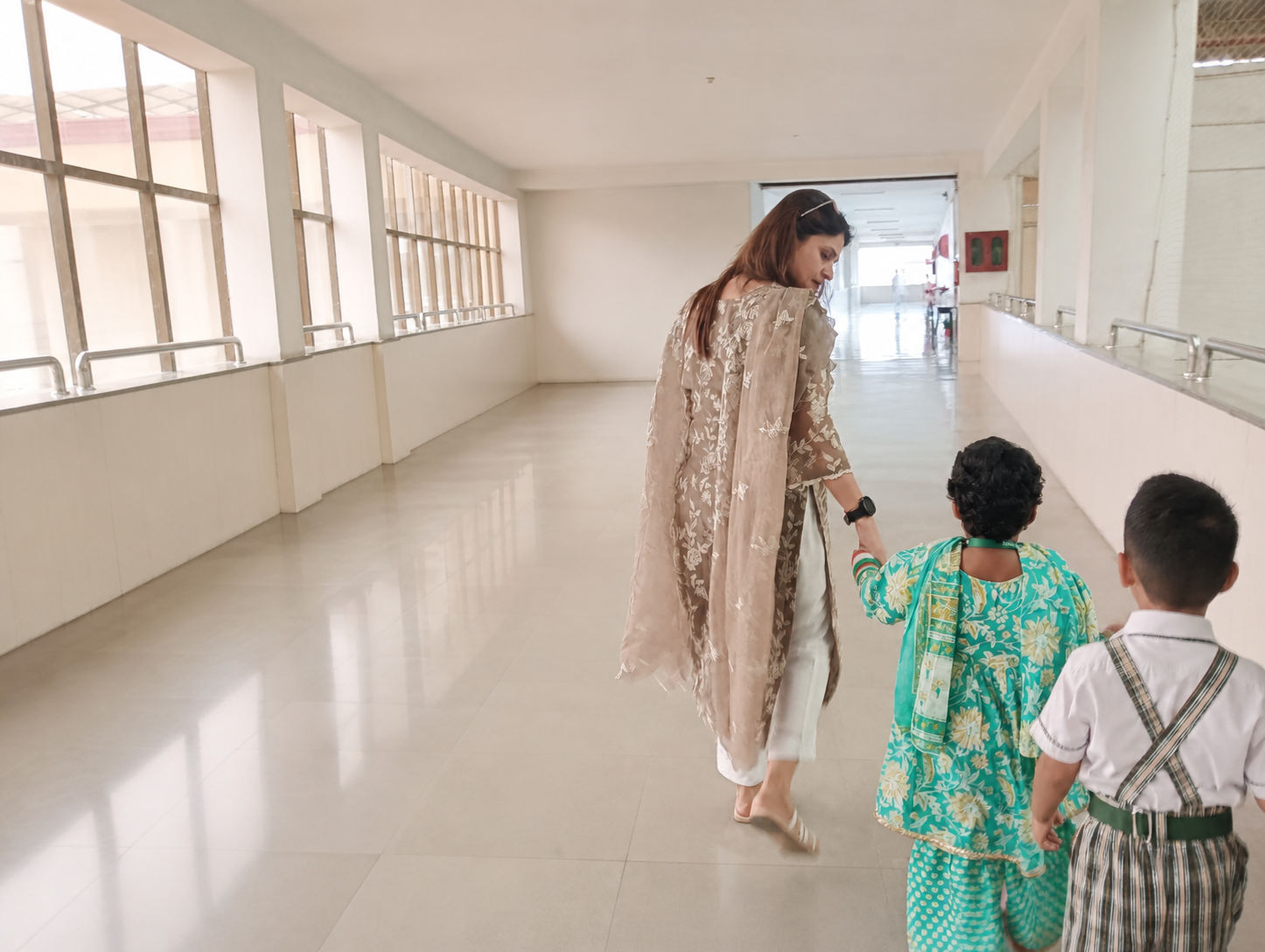
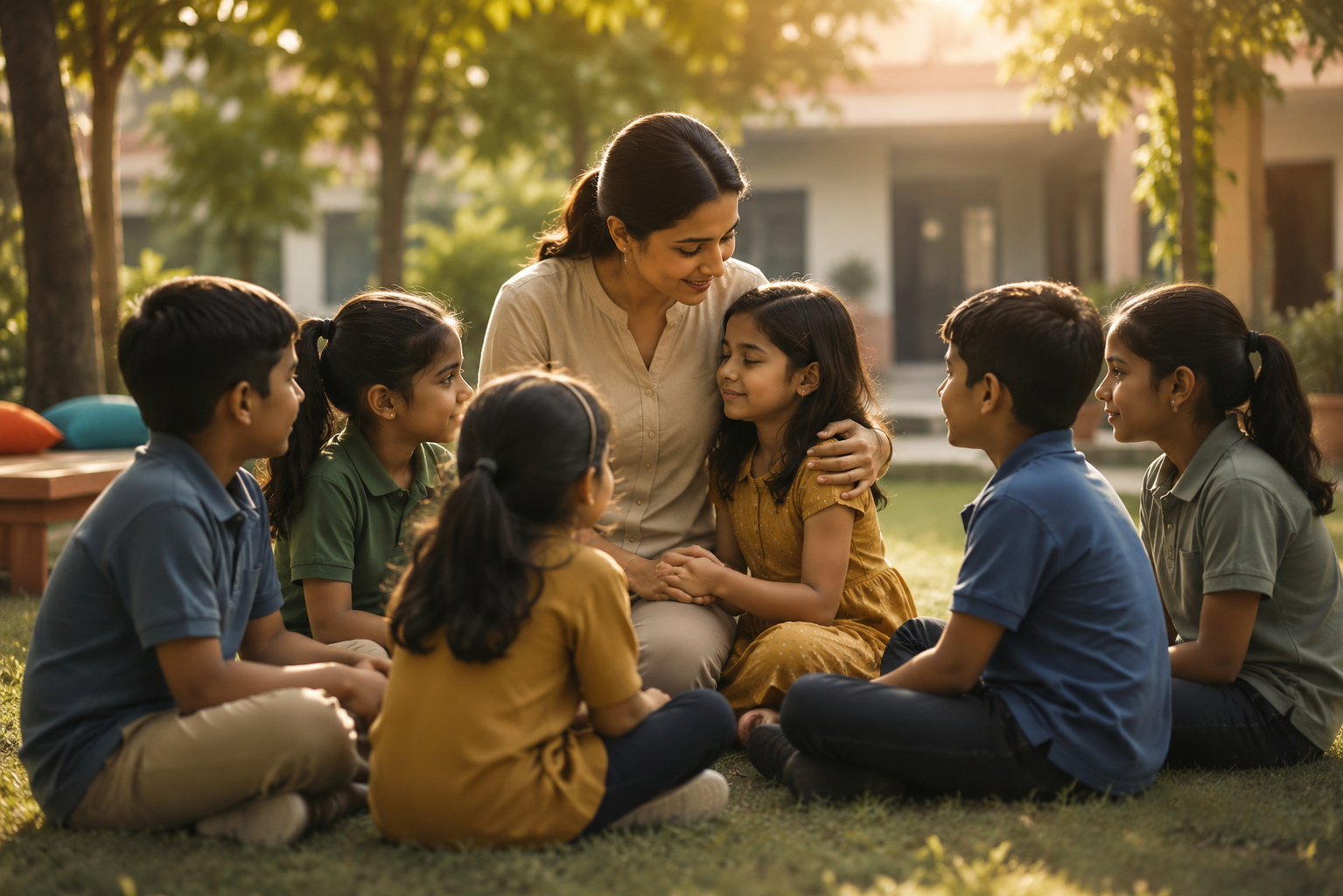
- Physical comfort and reassurance from a consistent, familiar adult
Middle School (Ages 11 to 14)
This is often the hardest stage to support, coinciding with early adolescence, social reshuffling, and the first real experience of academic pressure and peer comparison.
- Safe, structured spaces to discuss friendship conflict and social pressure
- Early, low key conversations about body image and self esteem before they become urgent
- Teachers trained to distinguish normal adolescent moodiness from a genuine warning sign
Secondary School (Ages 15 to 18)
Board exam pressure, career anxiety, and the approach of major life decisions converge at exactly the age when many teenagers are least likely to ask an adult for help directly.
- Confidential, easily accessible counselling that doesn't require a formal referral
- Open conversations about exam stress that don't minimise it or catastrophise it
- Career guidance that reduces anxiety about the future rather than adding to it
The Role of Parents, and Why Schools Can't Do This Alone
A school can build the best well being systems in the country and still see limited impact if home and school are working from different playbooks. Partnership with parents isn't a nice addition to a well being strategy, it's a condition for one actually working.
- Share what emotional well being support looks like at school so parents can reinforce it, not contradict it, at home
- Create low pressure ways for parents to raise concerns without feeling like they're escalating a crisis
- Offer parent workshops on recognising stress at home, framed practically rather than clinically
- Avoid framing every conversation with parents around problems, normalise well being check ins the same way academic progress updates are normalised
Schools that treat parents as partners in well being, not just as an audience for report cards, see support systems that actually hold up outside school hours.
The Cost of Getting This Wrong
Ignoring emotional well being doesn't keep a school neutral on the issue, it has a cost, even when that cost doesn't show up immediately in enrolment numbers or exam results.
- Higher teacher burnout from managing unaddressed behavioural issues in the classroom
- Declining engagement that eventually does show up in academic performance
- Erosion of parent trust when concerns are dismissed rather than acknowledged
- Missed early intervention windows, when small issues are easiest and cheapest to address
The Foundation Everything Else Is Built On
Emotional well being is not a competing priority to academics. It is the foundation that makes real academic engagement possible. A child who feels safe, seen, and supported is simply better positioned to learn, and that is true in every classroom, at every fee point, in every part of the country.
At Dev'Sh Group, we help schools build practical, sustainable well being systems that fit their actual staff and resources, not imported frameworks that look good on paper and disappear by term two. If your school is ready to make this a genuine priority, we'd love to talk.
🌐 www.devshgroup.com
📧 contact@devshgroup.com
📱 8796315550