


Future Ready Education: What Skills Will Students Need to Succeed Beyond 2030?
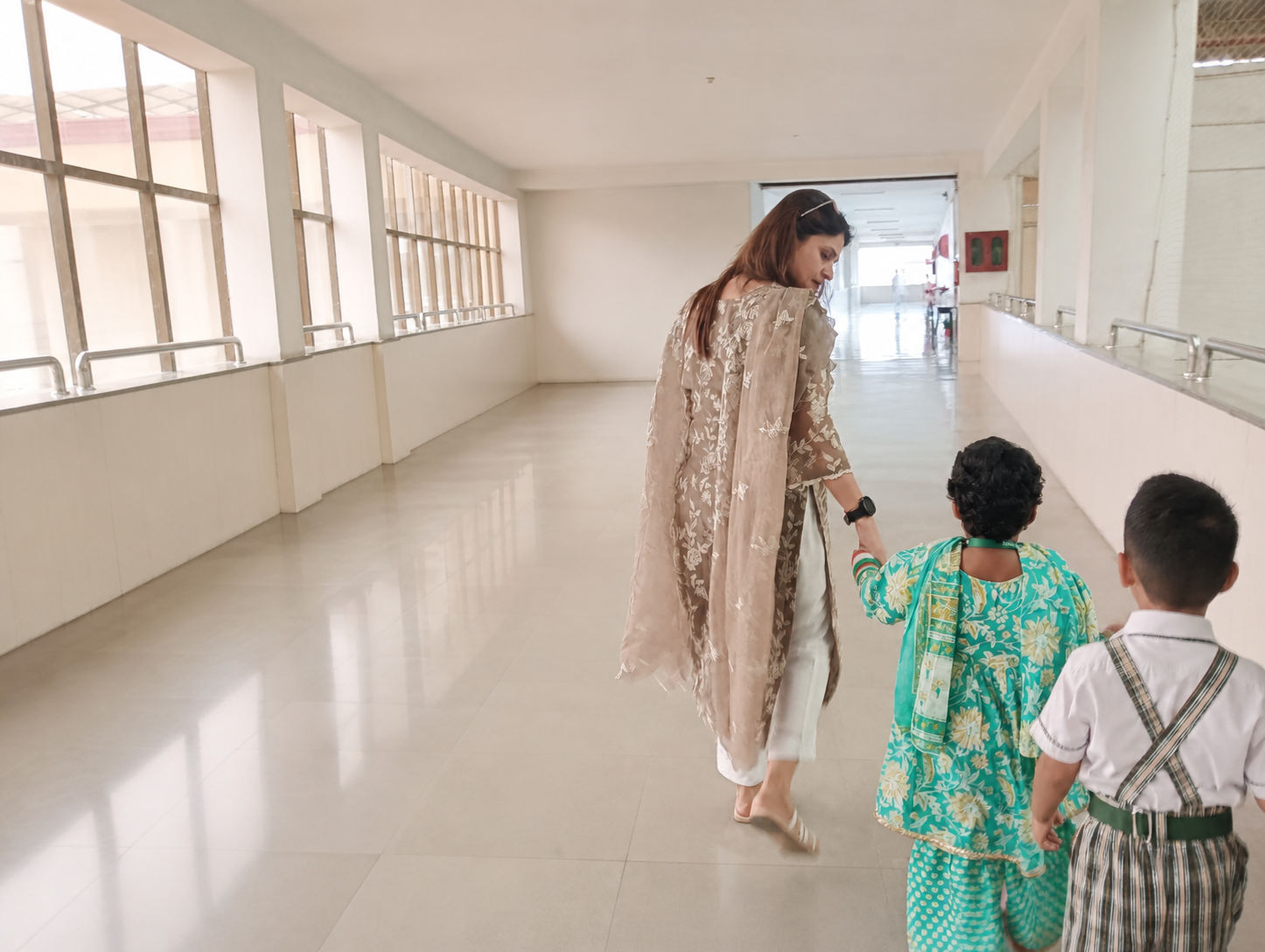
The Class 1 student walking into school this year will graduate into a workforce that doesn't fully exist yet. That should change how we think about what we're teaching them today.
Every generation of educators believes it is preparing students for an uncertain future. But the pace of change facing today's students, driven by automation, artificial intelligence, and shifting global economies, is different in scale, not just degree. The question schools now have to answer honestly is: are we still preparing students for a world that is already gone?
What's Actually Changing
- Routine cognitive work is increasingly automated, from data entry to basic analysis
- AI tools are becoming standard in white collar work across nearly every industry
- Careers are becoming less linear, with multiple pivots across a working life the norm rather than the exception
- Global, remote, and cross cultural collaboration is now a baseline expectation, not a specialised skill
None of this means academic knowledge stops mattering. It means academic knowledge alone is no longer sufficient. The skills layered on top of it are what will determine whether a student thrives or struggles to find their footing.
The Skills That Will Actually Matter
1. Critical Thinking Over Memorisation
When information is a search query away, the value shifts from recalling facts to evaluating them, telling reliable sources from unreliable ones, and forming independent judgment rather than repeating what was heard first.
2. Adaptability and Learning How to Learn
The specific tools students learn in school today will likely be outdated before they enter the workforce. What won't be outdated is the ability to pick up a new tool, system, or skill quickly and without panic.
3. Collaboration Across Difference
Future workplaces will be more distributed and more culturally mixed. Students need real practice working with people who think differently, not just sitting near them.
4. Emotional Intelligence
As routine tasks get automated, the human skills, empathy, communication, conflict resolution, self awareness, become the ones that are hardest to replace and most valuable to employers.
5. Digital and AI Fluency
Not coding for its own sake, but genuine comfort working alongside AI tools: knowing what to ask them, how to verify their output, and where human judgment still has to lead.
6. Financial and Practical Life Literacy
Basic financial literacy, decision making under uncertainty, and practical problem solving remain chronically under taught in Indian classrooms relative to how essential they are after graduation.
The most future proof skill is not any single skill at all. It is the confidence to keep learning new ones without fear.
Rewiring the Classroom for This Shift
- Move classroom time from pure content delivery to application, discussion, and problem solving
- Build in genuine project based learning, not projects that are really just longer worksheets
- Introduce structured collaboration, not just group seating
- Create space for productive failure, students need to practise recovering from mistakes, not just avoiding them
- Treat digital literacy as a core skill taught deliberately, not something students are assumed to "pick up"
Dev'Sh Insight: NEP 2020's shift toward competency based, skills focused education is not a policy detour, it's a direct response to exactly this shift in what the world will require of today's students.
The Cost of Waiting
Schools that delay this shift are not standing still, they are falling behind relative to schools that have already started. Students who leave school strong on content but untested on adaptability, collaboration, and critical thinking often struggle in their first real encounter with ambiguity, whether that's a university, an internship, or a job.
The Teacher Question Most Reforms Skip
Skills based education places new demands on teachers, who are being asked to facilitate thinking rather than simply deliver content, a genuinely different skill from the one most teacher training programmes still emphasise.
- Teachers need training in facilitating discussion and open ended inquiry, not just lecturing content
- Assessment design shifts from testing recall to evaluating reasoning, which takes more time to grade and design well
- Classroom management changes when students are debating and collaborating rather than sitting silently
- Teachers need permission, explicitly from leadership, to let lessons run less predictably than a traditional syllabus allows
Dev'Sh Insight: The single biggest bottleneck we see in skills based reform isn't curriculum design. It's giving teachers enough sustained coaching to actually feel confident teaching this way, rather than a one day workshop and a new textbook.
Rethinking Assessment for a Skills Based World
Traditional exams are good at measuring recall and procedural accuracy. They are far weaker at measuring judgment, collaboration, or the ability to apply knowledge to an unfamiliar problem, exactly the capabilities future ready education is meant to build.
- Project based assessments that evaluate process and reasoning, not just a final answer
- Portfolio based evidence of learning collected over a term, not a single high stakes exam
- Peer and self assessment components that build metacognitive skill alongside subject knowledge
- Structured oral assessments, which reveal thinking in a way written exams often cannot
None of this means abandoning exams altogether, board requirements aren't going anywhere, and academic rigour still matters. It means building genuine skills assessment alongside traditional testing, rather than treating the two as interchangeable.
How Indian Schools Compare Globally
Education systems in Singapore, Finland, and parts of Australia have spent over a decade shifting toward competency and skills based models, and their experience offers useful lessons rather than a template to copy wholesale.
- Singapore's emphasis on "Teach Less, Learn More" prioritised depth of understanding over syllabus coverage
- Finland's project based, low testing model shows strong outcomes with far less standardised assessment pressure
- Both systems invested heavily in teacher training before curriculum change, not after
The common thread across these systems isn't the specific curriculum content, it's that skills based reform succeeded where teacher capability was built first, and struggled wherever it was treated as a paperwork exercise.
The Real Advantage
No one can predict exactly what the job market will look like in 2035. But the direction of travel is clear enough to act on now: schools that build genuine thinking, adaptability, and human skills alongside strong academics are the ones giving their students the real advantage.
At Dev'Sh Group, we help schools redesign curriculum delivery, assessment, and classroom culture to build these skills without abandoning academic rigour. If your school is thinking seriously about what "future ready" actually means in practice, we'd welcome the conversation.
🌐 www.devshgroup.com
📧 contact@devshgroup.com
📱 8796315550