

Education Transformation
Blog page Devsh Logo

We Don’t Just Build Schools.
We Build What They Stand For.

Institutional Growth
Driving Excellence in Education

Leadership. Strategy. Transformation.

From academic excellence to institutional growth, we guide schools at every stage. Our expertise as Education Leaders and Institutional Advisors ensures impactful change, better outcomes, and sustainable success in today's evolving education landscape.
Devsh Logo BLOG

Ideas for schools that want to grow well

Practical perspectives on school leadership, curriculum, governance, operations and student growth.

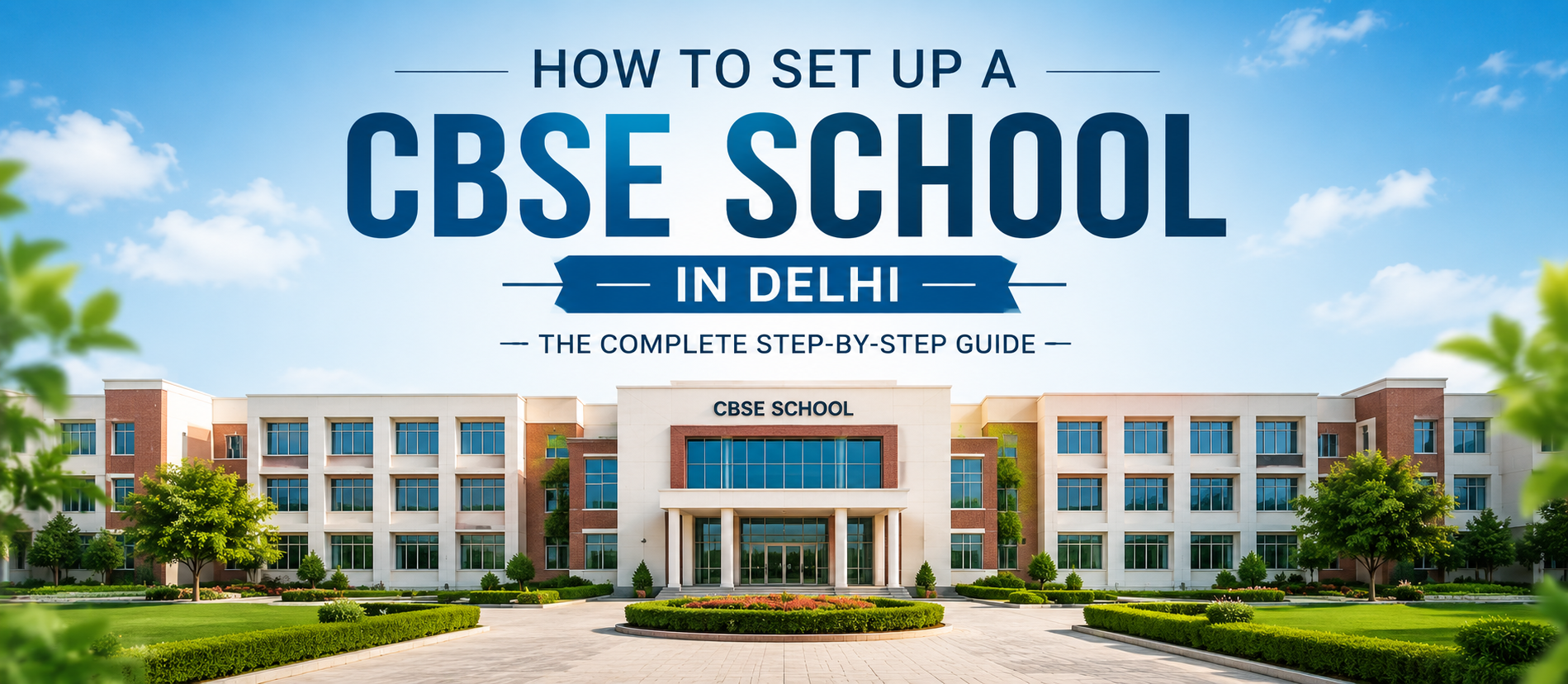
How to Set Up a CBSE School in Delhi The Complete Step-by-Step Guide
Education July 16, 2026

How to Set Up a CBSE School in Delhi The Complete Step-by-Step Guide

One of the most common questions among aspiring educators and school founders is, “We want to start a CBSE school in Delhi - where do we even begin?” Behind this question is often a passionate educator, a determined family, or an educational trust driven by a genuine vision to provide quality education and create a lasting impact. After guiding dozens of school founders through this exact journey from blank land to CBSE affiliation letter, we have mapped out every real step, every hidden delay, and every document that actually matters. This guide is that map. No vague advice. No jargon. Just the process - exactly as it works on the ground in Delhi.   Know What You Are Getting Into The first thing we tell every founder who walks into our office: setting up a CBSE school is not a transaction; it is a multi-year institutional project. The Central Board of Secondary Education (CBSE) governs affiliation through its Affiliation Bye-Laws, and Delhi adds its own regulatory layer through the Directorate of Education (DOE). What our clients are almost always surprised to learn: Provisional affiliation typically takes 12 to 18 months from the date of application Your school must already be operational with students enrolled and classes running before CBSE will consider your application You will be dealing with both the CBSE regional office and the Delhi government simultaneously Infrastructure must be fully ready before the CBSE inspection team visits, no exceptions Dev'Sh Insight: Most delays we see happen because founders underestimate the pre-application preparation time. We recommend starting the documentation and legal setup at least 18 months before you want to open your doors.   Build Your Legal Foundation First Before a single brick is laid or a student is enrolled, you need a legal entity. CBSE will not affiliate a school that is owned by an individual or run as a for-profit business. Education, under Indian law, is a non-profit activity. The three structures we help our clients register: Registered Society: The most common route. Registered under the Societies Registration Act, 1860. Requires a minimum of 7 founding members. Best suited for collaborative and community-driven school projects. Public Charitable Trust: Registered under the Indian Trusts Act. Works well for family-run educational initiatives. Simpler governance but requires careful drafting of the Trust Deed. Section-8 Company: Incorporated under the Companies Act, 2013. More compliance-intensive but offers a strong corporate structure preferred when institutional credibility is a priority. Dev'Sh Insight: We always advise registering the entity in Delhi itself. Out-of-state registrations frequently raise questions during the CBSE and DOE review and can add months to your timeline. Land & Infrastructure — The Non-Negotiables Infrastructure is where most first-time founders either overspend unnecessarily or fall short of CBSE norms. In our experience, a thorough infrastructure audit before construction begins saves lakhs and months. Here is exactly what CBSE requires: Land: Minimum 1.5 acres in metro cities, Delhi qualifies as a metro Owned outright by the trust or society, OR on a long-term lease of at least 30 years in the institution's name Land-use certificate from the Delhi Development Authority (DDA) confirming educational use is permitted Building: Classrooms: minimum 8 sq. metres per student; standard class capacity is 40 students Separate, properly maintained toilets for boys and girls (1 per 40 students minimum) Library with a dedicated reading room Functional science labs: Physics, Chemistry, Biology and a Computer lab Art room, activity room, and a health room with basic first-aid equipment Barrier-free access throughout the campus: ramps, accessible toilets, signage Fire NOC from Delhi Fire Services and a building completion certificate from MCD or NDMC   The Document Stack - Start Collecting Early One of the first things we do when a new client engages dev'Sh Group is run a document audit. In nearly every case, at least 3 to 4 critical documents are either missing, incorrectly named, or obtained from the wrong authority. Here is the complete checklist we use: Trust or Society registration certificate Memorandum of Association (MOA) and Rules & Regulations of the institution Permanent Account Number (PAN) of the institution Land ownership or lease deed with mutation entry in the institution's name Building completion certificate from MCD or NDMC Fire safety NOC from Delhi Fire Services Sanitation certificate confirming safe drinking water and hygiene facilities No Objection Certificate (NOC) from the Delhi Directorate of Education Affidavit by the school manager confirming compliance with CBSE Bye-Laws Staff salary certificates and appointment letters (if school is already functional) Audited financial statements for the last 3 years (where applicable)   Dev'Sh Insight: The Delhi DOE NOC alone can take 3 to 6 months. We recommend initiating this application in parallel with your building construction - not after it.   The CBSE Affiliation Application - Step by Step Once your school is operationally running at minimum Classes I to V - you can apply for Provisional Affiliation through the CBSE OASIS portal (oasis.cbse.gov.in). Our team handles this portal process end-to-end for clients, but here is how it works: Register on OASIS: Create your school profile with exact institutional details. Any mismatch between what you enter and your physical documents is grounds for rejection.   Upload Your Documents: Every file must be in the prescribed PDF format and within size limits. CBSE is strict about document clarity blurry scans cause delays.   Pay the Affiliation Fee: Fees are paid online and vary by school level: Primary, Secondary, or Senior Secondary. Always check the current fee schedule on the CBSE website.   CBSE Inspection: An inspection committee physically visits your school. They verify infrastructure, staff qualifications, and record-keeping. This is the most critical moment in the process.   Receive Provisional Affiliation: If the inspection is cleared and all documents are in order, CBSE issues provisional affiliation and valid for 3 years, after which you apply for regular affiliation.   Staffing: The Compliance Layer Most Founders Miss When we review client applications that were previously rejected or stalled, staff-related non-compliance is one of the top two reasons. CBSE does not just check your building, it checks your people. Here is what must be in place before the inspection: The Principal must hold a postgraduate degree plus B.Ed. with at least 5 years of teaching experience All teachers must have relevant subject degrees and B.Ed. qualifications; designations follow CBSE's TGT and PGT framework Pupil-to-teacher ratio must be maintained at 30:1 and document this clearly All staff must be paid via bank transfer; cash payments are a red flag during inspection PF and ESI contributions must be deducted, deposited, and properly documented Fees, Finances & What Delhi Law Actually Says Running a school in Delhi means operating under the Delhi School Education Act, 1973, a law that many founders are unaware of until it becomes a problem. Here is what we ensure our clients understand from day one: Annual fee increases beyond 10% require prior approval from the Directorate of Education A minimum of 80% of any school surplus must be reinvested into the institution and it cannot be distributed Audited accounts must be submitted annually to both CBSE and the DOE A School Fee Committee with parent representatives is mandatory under Delhi rules   The 5 Mistakes We See Over and Over Again After working with school founders across Delhi and the NCR, these are the five mistakes we see most consistently and the ones that cost the most time and money to fix: Land not in the institution's name: Founders often use family-owned property without transferring it to the trust. CBSE requires the land to be in the trust's name and full stop.   Applying before the school is functional : CBSE does not entertain applications from schools that are not yet running. You need enrolled students and active classes before applying.   Missing the CBSE application window: CBSE opens affiliation applications in specific windows each year. Missing the window means waiting another full year.   Data mismatches on OASIS : A single discrepancy between what is entered on the portal and what appears in your physical documents triggers rejection. We review every field before submission.   Using unapproved learning materials: Using non-CBSE-aligned textbooks before affiliation is confirmed gives the inspection team grounds to flag non-compliance.   Our Final Word Setting up a CBSE school in Delhi is one of the most impactful things you can build. It is also one of the most process-intensive. In our years of consultancy work, the founders who succeed are not necessarily the ones with the largest budgets, they are the ones who plan early, document everything, and work with advisors who have done this before. At dev'Sh Group, we exist precisely for this journey. We have walked this road with founders across Delhi and we know exactly where the potholes are. Whether you are starting from scratch or stuck somewhere in the middle, we are ready to step in. Start Your School Journey with Dev'Sh Group 🌐  www.devshgroup.com πŸ“§  contact@devshgroup.com πŸ“±  879631555

Read more
7 Signs Your School Needs a School 360 Audit (And How to Fix Them)
Education July 13, 2026

7 Signs Your School Needs a School 360 Audit (And How to Fix Them)

Lets be honest for a second. Most school leaders know something isn’t quite right but they can’t put their finger on exactly what. Results are average. Parents are raising questions. Teachers seem exhausted. And yet, on paper, everything looks… fine. That gap between “looks fine” and “actually thriving” is precisely where a School 360 Audit lives. A 360 Audit isn’t about finding fault. It’s about finding the full picture and turning it into a plan. Unlike a government inspection or a teacher appraisal, a School 360 Audit examines your entire school ecosystem leadership, learning, culture, systems, data, and community together, through the same lens. So how do you know if your school needs one? Watch for these 7 signs.   Sign 1. Your Results Are Flat And You Don’t Know Why You’ve tried new programmes. Invested in CPD. Changed the timetable. But the data barely moves. That’s not a performance problem it’s a diagnostic one. You’re applying solutions before identifying the real issue. Watch for: Attainment stagnant for 2+ years despite multiple interventions CPD spend rising, but classroom outcomes aren’t following No one can clearly explain why certain pupil groups are underperforming The Fix:  A 360 Audit maps every factor influencing attainment and pinpoints where the blockage actually is so interventions hit the root cause, not the symptom.   Sign 2. Staff Morale Is Low, But Feedback Is Vague You ask teachers how they’re doing and get polite answers. But retention figures and sickness absence tell a different story. Low morale rarely has one cause it’s usually a quiet accumulation that nobody wants to name directly. Watch for: Staff surveys show satisfaction, yet turnover is above average Teachers declining additional responsibilities without explanation NQTs leaving within their first two years more often than not The Fix:  A 360 Audit creates confidential channels so staff speak honestly turning vague discomfort into clear, solvable patterns.   Sign 3. Parents Are Disengaged Or Engaged For the Wrong Reasons Either parents only appear when there’s a problem, or they’re constantly questioning decisions. Both signal the same thing: communication systems that evolved by accident rather than by design. Watch for: Parents unaware of your school’s educational vision Complaints mostly about communication gaps, not actual decisions Parent Governor role filled by default, not genuine community enthusiasm If parents don’t trust the school, pupils feel it  and that affects everything from behaviour to attainment. The Fix:  A 360 Audit maps your community touchpoints and identifies exactly where trust breaks down so you can rebuild it deliberately, not reactively.   Sign 4. Leaders Are Reacting, Not Leading What did your SLT spend most of last week doing? If the honest answer is “putting out fires” that’s a structural problem, not a personal one. Reactive leadership happens when systems are unclear and data isn’t used proactively. Watch for: SLT meetings dominated by immediate problems, not strategic planning Middle leaders escalating decisions they should own themselves The school improvement plan rarely referenced between formal reviews The Fix:  A 360 Audit stress-tests your leadership structure — revealing where accountability lives and how to shift from firefighting to forward-thinking.   Sign 5. Your Self-Evaluation Is More Ritual Than Reality Many schools have a Self-Evaluation Form. Far fewer have a self-evaluation culture. If your SEF gets updated before Ofsted and then ignored, it’s a document not a tool. Watch for: Judgements consistently rated ‘Good’ regardless of actual evidence The SEF written by one person and rarely discussed as a team Teachers who have never read it and wouldn’t know where to find it Honest self-evaluation isn’t uncomfortable  it’s the most powerful leadership tool in existence. The Fix:  A 360 Audit brings external perspective to your internal story validating what’s genuinely strong and challenging what’s been polished beyond recognition.   Sign 6. Curriculum Is Busy, But Not Coherent Your curriculum looks full. Teachers are delivering. But ask pupils what they’ve learned and why it matters and you get blank looks. Busy and coherent are not the same thing. Watch for: Topics repeated across year groups with no deliberate progression plan Subject leaders designing in isolation with no cross-curricular dialogue Pupils unable to explain the ‘so what’ behind what they’re studying The Fix:  A 360 Audit maps your curriculum against your educational intent not just what’s being taught, but why, to whom, in what sequence, and with what effect.   Sign 7. Something Major Just Happened And You Need to Reset New headteacher. Difficult Ofsted. School merger. Falling roll. Big disruptions good or bad create rare openness to change. The mistake is waiting for things to settle, because that’s when old problems quietly reassemble. This applies if: A new leader wants an honest baseline before making decisions A recent Ofsted felt either unfair or uncomfortably accurate Two school cultures are now colliding after a federation or merger The schools that bounce back fastest treat disruption as an invitation to redesign not just recover. The Fix:  A 360 Audit post-disruption gives you a clean baseline and a structured path forward before old habits take hold again.   What Does a School 360 Audit Actually Look Like? The word ‘audit’ can feel heavy but the process is collaborative, not judgemental. It unfolds in three clear phases: Discovery: Conversations with leaders, teachers, support staff, pupils, and parents. Anonymous surveys. Data and document review. Synthesis: Evidence triangulated across six dimensions: Leadership, Teaching & Learning, Culture & Wellbeing, Curriculum, Systems & Data, and Community. Recommendations: A prioritised action plan. Not a 40-page report nobody reads. A practical roadmap with quick wins, medium-term goals, and long-term strategy. You’re not being graded. You’re gaining clarity.   One Final Thought The best school leaders we’ve worked with share one quality: they’re not afraid of the truth. They’d rather know where things actually stand than operate on assumptions. A School 360 Audit is, at its core, a commitment to honesty honest data, honest conversations, and an honest look at what could be extraordinary. You don’t have to wait for Ofsted to tell you what’s wrong. You can find out yourself — and fix it first. If any of these 7 signs felt familiar, that’s not something to feel bad about. It’s information. And information is where every great school improvement story begins. We’d love to help you write yours. Interested in a School 360 Audit for your school? Book a free 30-minute discovery call with the Dev’Sh Group team, no obligation, no jargon, just an honest conversation about your school. 🌐  www.devshgroup.com πŸ“§  contact@devshgroup.com πŸ“±  8796315550 — The Dev’Sh Group Team    

Read more
NEP 2020 Implementation:  What CBSE Schools in Delhi Must Do Right Now
Education July 9, 2026

NEP 2020 Implementation: What CBSE Schools in Delhi Must Do Right Now

Recently, I sat down with a school principal from a well-performing institution. The school had completed every required process - NEP orientation, development planning, and compliance documentation. But when I asked what had truly changed inside the classrooms, the room fell silent for a moment. "We're working on it," she said. That pause is what this blog is about. NEP 2020 is the biggest shift in Indian education in 34 years. For CBSE schools in Delhi, this isn't a policy to wait out. It's one to lead right now.   What NEP Actually Requires: The Five Shifts That Cannot Be Ignored NEP 2020 is not about adding more to the curriculum. It is about fundamentally rethinking how schools operate. These five areas are non negotiable for CBSE schools in Delhi:   Shift 1   From Rote Learning to Conceptual Understanding This sounds obvious. It is not being done. A school that finishes the NCERT textbook and moves to past papers is still operating in rote mode   regardless of what its mission statement says. Lessons must prioritise application over memorisation Students should be explaining, connecting, and questioning   not copying Teachers need structured time to redesign lesson plans, not just deliver old ones faster   Shift 2   The New 5+3+3+4 Structure The old 10+2 structure is being replaced. Schools need to understand what this means practically: Foundational Stage (Ages 3 to 8): Play based learning. Not worksheets. Preparatory Stage (Ages 8 to 11): Activity based, integrated subjects Middle Stage (Ages 11 to 14): Subject teachers introduce abstract thinking gradually Secondary Stage (Ages 14 to 18): Student chosen electives, critical thinking, real world projects If your school's Class 1 still looks like miniature Class 6  worksheets, uniform seating, silent classrooms you are not NEP aligned, regardless of the age group label.   Shift 3   Holistic Assessment Over Marks CBSE's Competency Based Education (CBE) framework is already in motion. NEP requires schools to assess students on: Skills and competencies, not just content recall Portfolio work, projects, and performance tasks Student self assessment and peer feedback 360 degree progress reports   not just a mark sheet This means your current exam heavy assessment calendar is not just outdated. It is incompatible with where CBSE is heading.   Shift 4   Integration of Vocational Education NEP mandates that vocational exposure begins from Class 6. This does not mean adding a 'life skills' elective once a week. It means structured exposure to areas like: Coding and digital literacy Financial basics and entrepreneurship thinking Local craft, agriculture, or service sector skills depending on context Internship or community engagement opportunities at the secondary level Most Delhi CBSE schools are not doing this. Some have coding clubs. Almost none have a coherent vocational integration plan tied to the curriculum.   Shift 5   Mother Tongue as Medium of Instruction (Primary) This is the most debated shift   and the most misunderstood. NEP recommends home language or regional language as the medium of instruction up to at least Class 5, with a gradual transition to other languages. For Delhi CBSE schools serving mixed language households, this is genuinely complex. But it cannot simply be ignored. Schools must at minimum offer bilingual learning materials in early grades Teachers should be supported to communicate concepts in students' home languages Dismissing this shift because 'parents want English' is not a compliance argument   What Delhi CBSE Schools Must Do Right Now Not next year. Not after the board exams. Right now. Here is a prioritised action list based on where most Delhi CBSE schools currently stand: This Week: Conduct an honest school audit. Identify what's implemented, what's in progress, and what still needs attention. This Term: Redesign assessments with competency-based tasks, portfolios, student reflections, and meaningful parent feedback. This Quarter: Focus on continuous teacher development through coaching, collaboration, and practical classroom application. This Academic Year: Create a vocational learning roadmap for Classes 6 onwards through partnerships and real-world exposure. Before the Next Parent Meeting: Communicate NEP changes clearly and proactively to build trust and understanding. The schools that act today will lead tomorrow.   β—†  Honest Advice What Not To Do Just as important as the action list is what to avoid. These are the most common mistakes Delhi schools are making: Rebranding existing practices with NEP terminology without changing anything Treating NEP as an addition to current workload rather than a redesign of priorities Skipping foundational stages because 'they are not board level' Assuming CBSE compliance means full NEP implementation   they overlap but are not the same Leaving NEP implementation entirely to one coordinator instead of embedding it across leadership NEP 2020 is not a box to check. It is a direction to move in   consistently, structurally, and with honesty about how far you still have to go.   How Dev'Sh Group Helps Schools Get This Right Reading about NEP 2020 is one thing. Implementing it inside a real school with real teachers, real parents, and a real timetable is another. That's exactly where Dev'Sh Group works. Not at the policy level. At the school level. We've worked with CBSE schools across Delhi to close the gap between what NEP 2020 asks for and what's happening in classrooms. Here's how: Curriculum Mapping & Gap Analysis: We sit with your team and map your current setup against the 5+3+3+4 structure. You get a clear, honest picture of what needs to change first. Teacher Training That Sticks: Ongoing, school-embedded training that helps teachers actually shift how they teach not a one-day workshop that everyone forgets by Friday. Assessment Redesign: We help build the 360-degree progress card, introduce student self-reflection tools, and train teachers to give feedback that means something. Vocational Programme Setup: From finding local professional partners to designing the Bagless Days calendar, we handle the groundwork. Parent Communication Strategy: We help schools design transparent communication that brings parents along rather than alarming them.   We don't come in with a template and leave with an invoice. We work alongside your team until the change is real visible in classrooms, felt by students, and trusted by parents. If your school is serious about NEP 2020 not just serious about appearing serious reach out to Dev'Sh Group.  🌐 www.devshgroup.com πŸ“§ contact@devshgroup.com πŸ“± 8796315550   Let's start with a single honest conversation.  

Read more
20 Years Inside Schools: Why Dev'Sh Group Sees What Other Consultants Miss
Education July 3, 2026

20 Years Inside Schools: Why Dev'Sh Group Sees What Other Consultants Miss

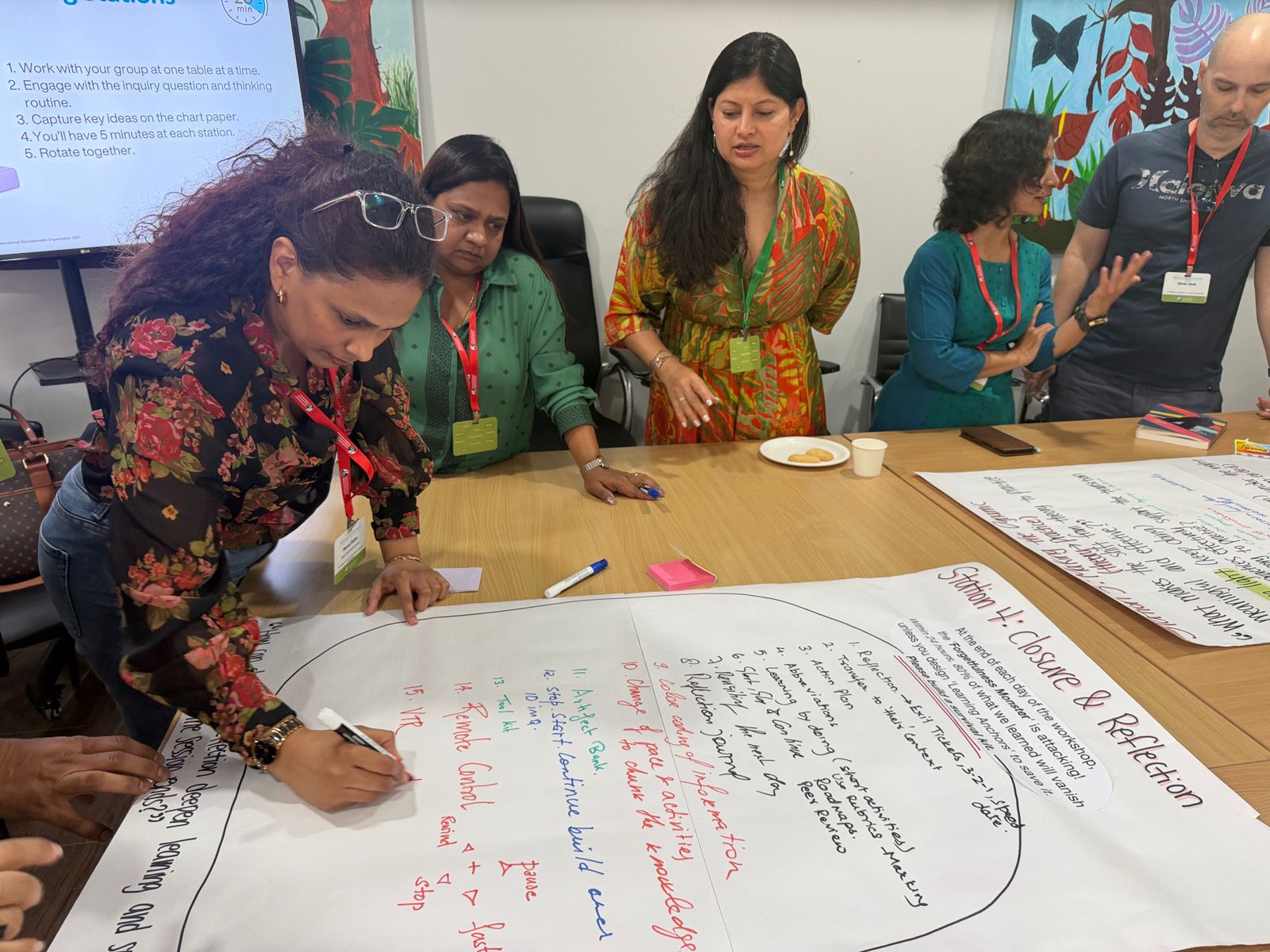
Most consultants walk into schools with a clipboard. We walk in with experience, empathy, and a genuine understanding of the education ecosystem That one sentence is not a tagline. It is the entire reason Dev'Sh Group exists, the reason our recommendations actually land, and the reason school leaders tell us we are the first consulting team that has ever made their staff feel understood rather than evaluated. And that distinction matters. Because when people feel understood, they are far more willing to embrace change, engage in the process, and turn recommendations into real outcomes. Yet, despite the importance of this human connection, it is often missing from traditional education consulting. To understand what makes our approach different, it helps to first look at what is broken in the way most education consulting works today and why it continues to fall short for schools that genuinely need support. The Problem With Most Education Consulting Here is a scene that plays out in schools more often than anyone admits: •      A consultant arrives. Two days of observations, a few teacher interviews, some data review. •      Day three: a 60-slide deck. Big words. Bold recommendations. •      The principal nods. Teachers sit politely. •      The consultant leaves. Everyone exhales. Nothing changes. Why does this keep happening? Because the consultant was diagnosing a body they had never lived in. You cannot fully understand a school if you have never experienced the weight of teaching in one, the 7pm parent calls after a full day, the guilt of leaving a struggling child behind, the quiet frustration of a policy that makes no sense on the ground. This is not about bad intentions. It is a structural problem. When your experience lives outside the classroom, there are things you simply cannot see, no matter how sharp your research skills are.  What 20 Years Actually Looks Like Dev'Sh Group was not built in a boardroom. It was built inside schools. Government schools. Private schools. Urban campuses. Low-resource classrooms. High-performing institutions. Schools in crisis and schools quietly doing brilliant work. Over two decades, our team has collectively: •      Taught across primary, middle, and secondary levels •      Served as department heads, curriculum coordinators, and school leaders •      Designed academic programmes from scratch and watched them succeed or fail •      Managed staff through policy changes, school mergers, and post-pandemic chaos •      Sat across from parents who were angry, scared, or completely lost •      Navigated school management committees, education boards, and district politics That experience is not something you learn in a workshop. It is earned through years of showing up, making mistakes, adjusting, and figuring out what actually moves a school forward versus what just looks good on paper. Three Things We See That Others Miss After working with dozens of schools as consultants, we have noticed the same blind spots appear again and again. Here are the three that matter most: 1. The Hidden Teacher Morale Problem Test scores and attendance are the numbers everyone tracks. But none of those numbers tell you: •      That your best teacher is quietly looking for another job •      That half the staff stopped trying new ideas two years ago •      That people smile in meetings but feel invisible to leadership Teacher morale is the engine of a school. When it runs low, everything suffers classroom energy, student relationships, willingness to try anything new. But it rarely shows up in data. So consultants who live by data miss it entirely. We catch it because we know what it feels like from the inside. We know the difference between a team that is tired but still fighting and one that has quietly given up. 2. The Policy-Practice Gap Almost every school has a gap between what its documents say and what actually happens in classrooms. Here is what that looks like in practice: •      Lesson planning policies that three people follow •      Feedback guidelines being implemented by two teachers out of twenty •      Inclusion frameworks that exist on paper but have never been explained to anyone We have walked into schools that looked excellent on paper and found classrooms where students had not received feedback on written work in six weeks. Identifying this gap is not about blame. It is about understanding where the real work is. And it completely changes what the intervention needs to be.  3. The Cultural Current Running Beneath Everything Every school has a culture. But culture is not a motto on the wall. It is the unspoken agreement about how things actually work here: •      Who gets heard and who does not •      What gets rewarded and what gets quietly punished •      What people say in meetings versus what they say in the car park A school can have a culture of fear dressed up as high standards. A culture of burnout dressed up as dedication. A culture of exclusion dressed up as excellence. Identifying the real culture; not the aspirational one and takes years of reading rooms. You develop a feel for it. And once you see it clearly, you stop trying to install solutions on top of it and start working with what is actually there. What Our Work Actually Looks Like We will be honest: we are not the fastest, and we are not the cheapest. If you need a 48-hour audit and a polished PDF, we are not your team. What we do instead: •      Spend real time in classrooms, not just a walkthrough •      Have honest conversations with teachers, not just leadership •      Run listening sessions with students, who always know more than adults think •      Look at what is working, not just what is broken •      Build recommendations around your actual staff and your actual resources •      Stay through implementation and we do not hand over a report and disappear We have worked with schools in crisis. Schools that were already good and wanted to be great. School boards trying to understand why one campus thrives while a sister campus struggles. In every case, the difference was not our methodology. It was our perspective. A Final Word Education consulting has a credibility problem. Too many schools have spent real money on: •      Recommendations that never landed •      Initiatives that collapsed in month two •      Frameworks that sounded brilliant but had no relationship to reality We started Dev'Sh Group because we believed there was a better way. One rooted in genuine classroom experience. In honest relationships with the people inside schools. In the humility to know that every school is different and deserves solutions built for its specific reality not copied from somewhere else. Twenty years inside schools taught us that the answers are almost always already there ; in the people, in the relationships, in the quiet things no one has had the courage to say out loud yet. Our job is to help surface them. If you are a school leader wondering whether your school is reaching its potential; we would love to talk. Not to sell you a programme. Just to listen first. Because that is always where it starts. 🌐 www.devshgroup.com πŸ“§ contact@devshgroup.com πŸ“± 8796315550  

Read more